The Science of Sun That Disappears the Moment You Sit Outside
The sun was out for three hours. You saw it. You planned around it. You made the decision, found a spot, sat down. And then, within ninety seconds, a cloud arrived that had no business being there
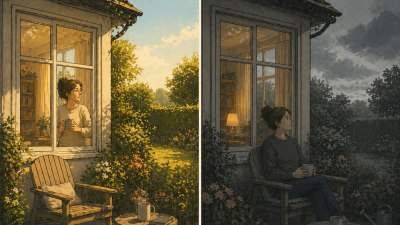
This image was created with the assistance of DALL·E
The Sun Was There. You Have Evidence.
This is the part that makes it genuinely maddening, and it is important to establish it clearly before getting into anything else. The sun was not imagined. It was not a brief optimistic misreading of the light through a window. It was out, properly out, for a sustained and documentable period of time during which you made observations, formed a plan, and acted on that plan in good faith.
You watched it from inside. You noted the quality of the light on the floor, the specific warmth of it through the glass, the way the garden or the street or the park looked in it, and you thought: I should be out there. You thought this for long enough to do something about it. You found the thing you were going to bring outside, the book or the coffee or the lunch or just yourself, and you went through the door and found a spot and sat down.
The cloud was already moving before you sat down. You did not know this. The cloud had no flag, no announcement, no warning system of any kind. It was operating on its own schedule, which had nothing to do with yours, and its schedule brought it across the sun at the exact moment you became stationary and committed to the outdoors.
You sat down in sunshine. You were in shade within ninety seconds. These are the facts of the situation and they are not your fault and they happen every single time.
Why Clouds Move Faster Than Your Decision-Making Process
A cloud at typical altitude moves with the wind at that level, which is almost always faster than the wind you feel at ground level. Surface wind is slowed by friction, by buildings, by trees, by the general texture of the ground. Wind at cloud level has none of these obstacles and moves freely, which means that a sky that looks stable and settled from below is actually a dynamic and rapidly changing system of air masses moving across each other at speeds that bear no relationship to how the afternoon feels from a garden chair.
A cumulus cloud, the classic white puffy kind that looks benign and decorative, can move at twenty to forty kilometres per hour at low altitude. This means it can cross the visible sky in minutes. The sky you assessed from the window was a snapshot of a moving system, not a stable state. By the time you acted on that snapshot, the system had already moved on and what was an open patch of blue sky is now something else entirely.
You were not looking at the sky. You were looking at a photograph of the sky taken five minutes ago, and making decisions based on that photograph, and then going outside to discover that the sky had not waited for you to finish deciding.
The particular cruelty of this is that it happens most dramatically on days with scattered cloud cover, which are also the days that look most promising from inside. A completely overcast sky does not trick you. You look at it and you know. A completely clear sky does not trick you either, though it sometimes lies about temperature. The days that get you are the days with a mix, blue patches between moving clouds, enough sun to make the outdoors look genuinely appealing, enough cloud cover to ensure that the sun is never in one place for very long. These are the days the gap closes exactly when you step into it.
The Ninety Second Window and Why You Always Miss It
Ninety seconds is approximately how long it takes to decide to go outside, find what you need, put on an appropriate layer that you will not end up needing, go through the door, find a spot, settle into it, arrange whatever you brought, and look up. It is also, with suspicious consistency, approximately how long a gap in the cloud cover lasts at the exact position of the sun on days when this phenomenon occurs.
This alignment is not literally true every time. Sometimes the gap lasts longer and you get ten minutes of real sun before the cloud arrives. Sometimes the cloud was already there and you never had the ninety seconds at all. But the experience of ninety seconds is the one that lodges in memory, the one that accumulates over years into a pattern, because ninety seconds is long enough to feel cheated and short enough that you cannot argue you had a reasonable amount of time.
Three minutes of sun before the cloud comes feels like something. Ten minutes feels like a decent stint. Ninety seconds feels like the universe waited for you specifically to sit down before making its move, which is not meteorologically accurate but is emotionally precise.
The sun did not leave because you sat down. But it left so consistently after you sat down that the difference between coincidence and intent has, over time, become academic.
The Chair Is Always Cold
While we are here, the chair is always cold, and this is a separate problem that compounds the main one.
Garden furniture, patio chairs, park benches, any outdoor seating that has been sitting in the shade or the overnight air, holds cold in a way that transfers immediately and completely through whatever you are wearing. You sit down into sunshine and cold simultaneously. The sunshine is addressing the top half of the situation. The chair is doing something else to the bottom half. You are warm on your face and arms and cold everywhere else, which is not a comfortable equilibrium and which the disappearance of the sun, sixty to ninety seconds later, resolves entirely in the wrong direction.
After the cloud arrives, you are cold everywhere. The chair, which was already cold, continues being cold. The air, which felt warm in the sun, reveals its actual temperature now that the sun is not compensating for it. The thing you brought outside, the coffee or the lunch or the book, is also cold, or getting there, and the whole enterprise begins to feel like a decision that made sense in different conditions that no longer exist.
You stay for a while anyway, because going back inside immediately feels like defeat, and because the sun might come back, and because you made a whole plan around being outside and abandoning it after two minutes requires a kind of psychological flexibility that is hard to find when you are sitting in a cold chair waiting for a cloud to move.
The Watching From Inside Problem
After going back inside, there is a very specific phenomenon that occurs with a reliability that borders on the mechanical. You go in. You make a drink or find something to do or simply stand near the window for a moment. And the sun comes out.
Not a thin, provisional sun. A full, generous, settled sun, the kind that looks like it intends to stay, that lands on the exact spot where you were sitting and makes it look warm and inviting and precisely as good as you thought it was going to be when you went out in the first place.
You watch it from the window. You think about going back out. You do the calculation: by the time I get back out there and get settled, it will probably go in again. You have learned something from the last twenty minutes. The learning is correct. The sun will probably go in again. And so you stay inside, watching the sunshine land on the empty chair you just vacated, and the sun stays out for another forty minutes, which is longer than it has stayed out at any point in the entire afternoon, and you watch all of it from inside.
This is not irony in the technical sense. It is something more specific than irony, something that does not have a name in English but which every person who has ever had a garden or eaten lunch outside has experienced and will recognise immediately.
Why You Go Out Again Anyway
The next day, or the next opportunity, you will go outside again when the sun is out. This is not stupidity. This is something more interesting than stupidity, which is hope operating independently of evidence. You know what happened last time. You know what happens most times. You go out anyway because the alternative is staying inside on a day when the sun is out, which is its own kind of loss, a guaranteed loss, whereas going outside contains at least the possibility of things going differently this time.
And sometimes they do go differently. Sometimes the cloud cover is genuinely light, or the wind is in a direction that keeps things clear, or you happen to sit down in a gap that lasts an hour rather than ninety seconds. Sometimes you get the full afternoon, warm and uninterrupted, the kind that justifies every previous failed attempt and resets your expectations back to optimistic for the next time.
This is what the sun is counting on. And it is right to count on it, because you will always go out again, and the chair will always be cold, and the cloud will usually arrive on schedule, and occasionally it won't, and that occasional afternoon is enough to keep the whole system going indefinitely.
The sun knows this. It has been doing it for longer than gardens have existed. It will be doing it long after the last garden chair has gone cold and stayed that way.
You will still go out next time. Of course you will. The sun was right there.