The Physics of Snowbanks That Never Shrink
Explore the fascinating physics behind snowbanks that persist through seasons and resist melting, revealing environmental impacts and thermodynamic principles.
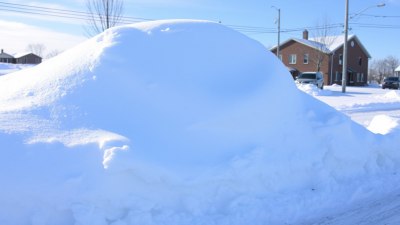
Image created with Flux Schnell
Snowbanks are a common sight during winter, often accumulating on streets, sidewalks, and open fields after heavy snowfall. While many snowbanks gradually melt away as temperatures rise, some persist remarkably long, sometimes surviving well into the warmer months. The physics behind these snowbanks that never shrink involves a sophisticated interplay of thermodynamics, heat transfer, environmental factors, and the intrinsic properties of snow itself. Understanding these mechanisms provides insights not only into basic physical processes but also into broader environmental challenges.
Snow: Structure and Thermal Properties
Snow is an aggregate of ice crystals formed from atmospheric water vapor that freezes in clouds. Its basic structure significantly impacts how it absorbs and dissipates heat. Snow crystals build up a porous matrix filled largely with air pockets, making fresh snow light and fluffy with a low density — typically around 50 to 200 kilograms per cubic meter, compared to liquid water’s 1000 kg/m³.
This porosity affects snow’s thermal conductivity. Air trapped between ice crystals is a poor heat conductor, so fresh snow acts as an effective insulator. Denser, older snow—commonly found in snowbanks that have undergone compression and partial melting—becomes more compact, reducing air content and increasing thermal conductivity. Thus, the snow's physical state profoundly influences how heat moves through the snowpack.
Heat Transfer Mechanisms in Snowbanks
The temperature of a snowbank depends on the balance between energy gained and lost. Heat transfer in snow occurs mainly through conduction, convection, radiation, and latent heat exchange.
Conduction is the direct transfer of heat through snow's solid network and trapped air pockets. Since air is a poor conductor, conduction is relatively slow, especially in fresh, fluffy snow. As snow densifies, conduction efficiency improves, allowing more heat influx.
Next, convection within the snowpack is limited because the porous structure traps air, minimizing air circulation inside. However, convection occurs more effectively at the snow surface where warm air meets the snowbank, influencing melting rates.
Radiative heat transfer originates from sunlight and surrounding thermal radiation. Snow reflects a large portion of solar radiation due to its high albedo but still absorbs some energy that contributes to warming. Overcast conditions reduce radiative heating. Snow’s emissivity, the ability to emit infrared radiation, also affects its heat balance.
Latent heat exchange involves melting and refreezing, processes that absorb or release heat. When snow melts, energy is absorbed (endothermic), cooling the snowbank and surroundings. Conversely, refreezing releases latent heat, warming the snow.
Factors That Allow Snowbanks to Persist
Several environmental and physical factors can cause snowbanks to endure beyond typical seasonal melting.
Depth and Compaction: Large snowbanks are often compacted by repeated snowfall, wind, and mechanical pressure such as snowplows. A compacted snowbank contains less air and more ice, increasing thermal conductivity and density. These changes slow the internal melting because the denser snow acts as a cold reservoir, absorbing heat only gradually.
Shade and Orientation: Snowbanks situated in shaded areas, such as the north-facing sides of buildings or valleys, receive less solar radiation. Limited exposure to direct sunlight drastically reduces surface melting. Likewise, snowbanks in areas blocked from prevailing warm winds can retain colder temperatures longer.
Albedo Effects: Snow has a high albedo, meaning it reflects most incoming solar radiation, helping preserve it. Over time, dirt and debris can lower albedo, accelerating melting. Persisting snowbanks often have less impurity or are continuously replenished with fresh snow, maintaining reflective properties.
Insulation by Newer Snow: Snowbanks can be insulated by successive snowfalls. Fresh snow on top preserves the colder layers beneath, stunting internal heat flow, much like how clothing insulates body heat.
Thermodynamics at the Snow-Air Interface
The interface between snow and the atmosphere is crucial for heat exchange. The temperature gradient here dictates how energy flows. When air temperatures remain just below freezing, the snow surface neither gains nor loses significant heat, dramatically slowing melting.
Wind speed also plays a role. Calm conditions limit convective heat loss or gain, stabilizing snow temperature. However, strong winds can increase heat transfer, either warming or cooling the snowbank depending on air temperature.
Meteorological conditions such as humidity affect sublimation—the direct transition of ice to vapor—which can reduce snow mass without melting. Sublimation is an important process for high-latitude or mountainous snowbanks.
The Role of Ground Temperature and Heat Flux
Snowbanks rest on the ground, which can conduct heat upward depending on its temperature. If the ground remains frozen, it acts as a cold sink, helping maintain low temperatures that preserve snow. Conversely, if the soil underneath warms, it can enhance base melting.
Snow also insulates the ground beneath it, affecting permafrost and soil temperature regimes. Thick snow cover can keep the soil colder longer in some settings, creating feedback loops important for environmental systems.
Influence of Wind and Atmospheric Conditions
Wind redistributes snow, shaping snowbanks by accumulation in some locations and erosion in others. This spatial variation affects the snowbank’s size and persistence. Where wind causes dense packing, snowbanks resist melting longer.
Atmospheric temperature fluctuations, especially cold snaps, can slow melting progress. Rapid temperature rises followed by cooling periods cause freeze-thaw cycles that compress and harden snowbanks, making them more resistant to shrinkage.
Human Impact on Snowbank Persistence
Urban environments frequently experience snowbank formation by plowed snow from roads and walkways. These snowbanks often contain contaminants such as dirt, salt, and debris, affecting physical properties.
Salt lowers the freezing point of ice but also strengthens the snowbank structure by causing recrystallization and refreezing cycles. This paradoxically can cause snowbanks to persist by inhibiting uniform melt patterns.
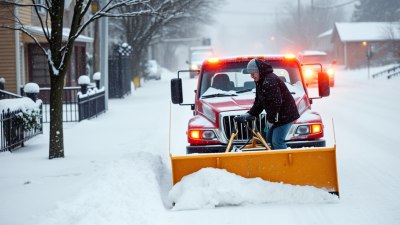
Compacted snowbanks formed by snow removal equipment become denser and less prone to melting quickly. Moreover, shaded urban canyons and reduced airflow can create microclimates where snowbanks linger.
Environmental Consequences of Persistent Snowbanks
Long-lasting snowbanks impact urban runoff and hydrology. As they eventually melt, runoff carries accumulated pollutants into waterways, affecting aquatic ecosystems.
The delayed melt alters the timing of water availability in some regions, impacting plant growth cycles and soil moisture regimes. In natural environments, persistent snowpacks provide cold habitat refuges critical for some species.
However, climate change threatens these dynamics by altering snowfall patterns, temperature profiles, and freeze-thaw frequencies, challenging the persistence of traditional snowbanks.
Seasonal Changes and the Annual Snow Cycle
Typically, snow accumulates over winter and diminishes in spring due to rising temperatures and sunlight. However, in specific conditions explained above, snowbanks can resist this cycle by minimizing heat absorption and maintaining low internal temperatures.
Understanding the physical controls on snowbank longevity helps meteorologists predict water availability and supports engineers designing urban drainage and winter maintenance strategies.
Advanced Modeling of Snowbank Thermodynamics
Scientists model snowbank behavior using heat transfer equations that consider conduction, convection, radiation, and latent heat terms. Field studies measuring temperature gradients within snowbanks help validate these complex models.
Remote sensing techniques including thermal imaging and satellite data provide large-scale observations of snow extent and temperature. These data help refine predictions about snowbank persistence under various climate scenarios.
Experimental Investigations and Laboratory Studies
Laboratory experiments replicate snow conditions under controlled temperature and humidity to observe the microphysical changes leading to snow compaction, ice recrystallization, and metamorphism. Such studies help clarify changes in thermal conductivity and albedo over time.
Experimental work also investigates how impurities like soot or salt influence snow’s radiative properties and melting behavior.
Case Studies: Regions Known for Persistent Snowbanks
Certain regions, especially high latitudes and mountainous zones, host snowbanks that last through summer. For example, areas in Alaska and the Canadian Rockies see persistent snowbanks sustained by low air temperatures, elevation, and shading.
Urban areas such as northern cities with heavy snowfall, like Minneapolis or Montreal, develop snowbanks that can remain well into late spring or early summer, influenced by local microclimates and snow management practices.
Snowbanks and Glacier Formation
Persistent snowbanks are precursors to glacier formation. When snow survives multiple seasons, it compacts into firn and eventually dense glacial ice. The physical principles governing snowbank persistence assist glaciologists in understanding glacier mass balance and dynamics.
Thus, the study of enduring snowbanks has implications beyond daily weather patterns, connecting to long-term climate and geophysical processes.
Practical Implications for Winter Urban Planning
Managing persistent snowbanks is a challenge for city planners. Snowbanks can block visibility, damage infrastructure, and create hazards on roads and sidewalks. Methods include mechanical removal, controlled melting, and design of drainage systems to handle meltwater.
Understanding the physics helps optimize timing and techniques for snow removal and reduce environmental impact from runoff pollutants.
The persistence of snowbanks arises from several interacting physical factors: snow density and structure, heat transfer processes, environmental shading, atmospheric conditions, and human influences. These elements combine to create snow masses that resist melting far longer than expected.
Advances in quantifying these processes enhance our ability to predict snow behavior across seasons and address related environmental and urban challenges.