Why Ice Appears Clear Until It Isn’t
Explore why ice looks clear initially but can turn cloudy, examining ice’s structure, impurities, and freezing processes.
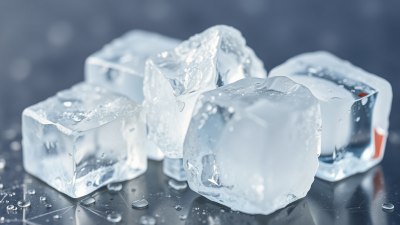
Ice is an everyday substance, appearing simple and transparent at first glance, yet its clarity can vary significantly under different conditions. You might notice ice cubes in your drink often start off clear but over time or in certain forms, they become cloudy or opaque. This change in appearance raises an interesting question: why does ice appear clear until it isn’t? To understand this phenomenon, we need to examine the science behind the formation of ice, its internal structure, and the role impurities play in light behavior.
At its core, ice is the solid phase of water, which means its molecules are arranged in a crystalline lattice. When water freezes slowly and under controlled conditions, the molecules have enough time to align into a consistent, uniform structure. This uniformity allows light to pass through with minimal scattering, rendering the ice transparent. This is why naturally formed ice, such as thick lake ice or glacier ice, often appears remarkably clear or blue-tinged, reflecting its purity and the steady freezing process.
The clarity of ice is heavily influenced by the rate at which water freezes. Rapid freezing traps air bubbles and impurities, interrupting the uniform crystal lattice. Air bubbles are the main culprits behind the cloudiness seen in many common ice cubes. When water is frozen quickly, tiny pockets of air become encased within the ice matrix, scattering light in all directions and producing the familiar white or opaque appearance. The quantity and size of these bubbles affect how cloudy or clear the ice appears. Larger air pockets tend to create more pronounced whiteness.
Another factor contributing to ice cloudiness is the presence of dissolved solids and minerals in the water. Tap water, for instance, contains various dissolved minerals such as calcium and magnesium. When freezing occurs, these minerals are excluded from the ice crystal lattice, concentrating initially in the remaining liquid water until it freezes last. This creates microscopic crystalline imperfections and sometimes even microscopic cracks in the ice structure, which similarly scatter and refract light, diminishing clarity.
The process of freezing also induces stress within the ice crystal structure. As water freezes, it expands by about 9%, pushing and pulling at the crystals forming around it. Uneven freezing or rapid temperature changes can generate small fissures within the ice block. These fractures act like tiny prisms, bending and diffusing light, and are another reason why ice that appears initially clear can become cloudy or milky over time.
Interestingly, the temperature and environmental conditions before and during freezing influence the ice’s final appearance. For example, ice formed from boiling distilled water is often clearer because boiling removes dissolved gases that contribute to bubble formation. Distilled water itself lacks minerals that can cause inclusions or imperfections. Also, cooling methods that freeze water from one direction, such as directional freezing, help push impurities and air bubbles away from the freezing front, resulting in clearer ice.
Natural occurrences of clear ice are also visible in certain environments. Arctic sea ice, for instance, can be very clear beneath the surface where it formed slowly and under stable conditions. Similarly, ice caves formed in glaciers often feature fully transparent walls, showcasing dense, bubble-free ice crystal structures. The clarity enhances the stunning visual effects, making these natural phenomena particularly attractive to explorers and photographers.
However, ice clarity can degrade even after it’s formed. As ice warms slightly or is disturbed, trapped gases or crystals can rearrange or expand, increasing the cloudy effect. This is why old ice cubes in a freezer sometimes appear cloudy even if they were initially clear. Additionally, repeated freeze-thaw cycles accelerate microfracture formation within the ice, leading to progressive cloudiness over time.
There are practical applications for understanding ice clarity. For example, the beverage industry values clear ice cubes because they enhance aesthetic appeal and melt more slowly, reducing dilution. To achieve this, specialized ice makers use slow freezing techniques and directional freezing where water freezes from one side, pushing impurities down and out. In contrast, homemade ice cubes made in standard trays typically freeze from all sides simultaneously, trapping air and creating cloudy ice.
On a larger scale, the clarity and purity of ice impact scientific measurements in climate studies. Ice cores drilled from glaciers and polar ice sheets preserve bubbles of ancient atmospheric air. Scientists study these bubbles to understand past climates and atmospheric composition. The ability to identify and interpret the clarity and internal characteristics of ice cores is crucial for accurate data extraction, linking ice morphology directly to our understanding of Earth’s history.
Looking at the molecular level, water molecules form hexagonal crystalline structures when frozen. Perfect, defect-free crystals allow light to pass with minimal refraction, resulting in transparency. Any deviation or imperfection, whether caused by trapped air, foreign particles, or structural defects, increases light scattering. Thus, the structural quality of the ice crystal lattice directly corresponds to its optical properties.
The interaction of light with ice also depends on its surface conditions. Smooth polished ice surfaces reflect less light and appear clearer, while rough surfaces scatter light at varying angles, making ice look dull or cloudy. This is apparent when comparing smooth ice rinks to rough natural ice surfaces, where the former reflect and transmit light more evenly.
In addition to air bubbles and impurities, the size of the ice crystals matters. In some industrial applications, ice is formed with very fine crystals (called crushed ice or snow ice), which scatters light heavily and results in a nearly opaque or white look. Larger crystals, found in slow-frozen blocks, allow light to transmit through more effectively, increasing clarity.
Scientists and engineers continue to explore ways to optimize ice clarity for different uses, such as culinary presentations, preservation of biological samples, and filmmaking. Understanding the principles behind ice’s appearance has led to innovations in ice manufacturing, including devices that slowly circulate water during freezing to minimize trapped air and impurities.
Ice’s interaction with light is also affected by environmental phenomena like frost and snow accumulation on its surface. These external layers scatter incoming light, obscuring the ice’s inherent clarity. Thus, ice that appears clear in a laboratory setting might look quite different when exposed to weather, dirt, or mechanical wear in the natural world.
In summary, the reason ice appears clear until it isn’t involves a complex mix of physical and chemical factors. The speed and direction of freezing, presence of air bubbles and impurities, structural integrity of the ice crystals, environmental conditions, and surface texture all play vital roles in determining ice’s transparency or cloudiness. Ice is clear when its internal structure is uniform and free of defects, allowing unimpeded light transmission. When this structure is disrupted—by trapped gases, minerals, microcracks, or rough surfaces—light scatters, converting clear ice into cloudy ice.
Recognizing these principles not only helps explain a simple everyday observation but also informs various practical and scientific applications. Whether you’re appreciating the beauty of glacier ice, the aesthetic of clear cocktail ice cubes, or the scientific implications in climate research, the clarity of ice reflects delicate balances in nature’s processes. Understanding why ice changes its appearance deepens our appreciation of this seemingly simple yet profoundly complex substance.