Why Ice Appears After You Decide It’s Safe
Explore the science and psychology behind why ice forms right after you decide conditions are safe.
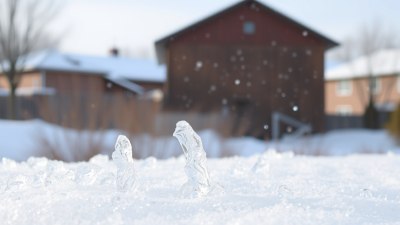
Image created with Flux Schnell
Ice formation is a fascinating natural phenomenon that we often take for granted. Many people notice an interesting pattern: ice seems to appear immediately after they've determined the conditions are safe to proceed, such as leaving the house or starting a walk. This counterintuitive experience prompts deeper questions about the interplay between environmental factors and human perception. Understanding why ice appears right when you decide it's safe involves exploring the physics of freezing, atmospheric conditions, and psychological influences on perception.
Understanding Ice Formation Basics
To comprehend why ice appears in certain conditions, it’s essential to understand the basics of how ice forms. Ice is the solid state of water, formed when the temperature drops below 0 degrees Celsius (32 degrees Fahrenheit) under standard atmospheric pressure. Actually, freezing involves the change of water molecules from a liquid arrangement to a more rigid crystalline structure, known as ice crystals.
However, the temperature alone doesn't dictate immediate ice formation. Water can remain liquid below its freezing point in what's known as supercooling. For ice to actually form, there must be nucleation points or disturbances that allow molecules to bond together into the crystal lattice. This explains why sometimes surfaces look wet and liquid even in subfreezing conditions but suddenly become icy when disturbed or when conditions change slightly.
The Role of Temperature Fluctuations
Temperature is the main driver in ice formation, but minor fluctuations near the freezing threshold can cause ice to appear suddenly. During early morning or evening times, temperatures hover around freezing. When you decide it’s safe to venture outside—perhaps mid-morning after observing daylight or feeling slightly warmer—the actual temperature might still be at or below freezing but influenced by direct and indirect environmental factors.
For example, ground surfaces like roads or sidewalks lose heat quickly at night and are often colder than the ambient air temperature measured by thermometers. Even if the air temperature rises above freezing during the day, cold surfaces can cause moisture to freeze the moment you step outside. This is why ice can seem to ‘‘appear’’ precisely when you decide conditions are safe to be outdoors.
Formation of Black Ice and Its Deceptiveness
One of the most dangerous and deceptive forms of ice appearing after you deem it safe is black ice. Black ice is a transparent, thin layer of ice that blends into the pavement, making it nearly invisible to the naked eye. Its formation often coincides with marginal temperatures and moisture presence from dew, fog, or light precipitation.
Nighttime radiation cooling causes surfaces to drop below freezing rapidly, allowing moisture from the air to condense and freeze on roads. When the sun rises and warms the air slightly, conditions might seem safe; however, black ice can persist on shaded or less-exposed patches. This explains the abrupt appearance of ice just when you think temperatures have risen enough to prevent it.
Humidity and Atmospheric Moisture Effects
Humidity plays a crucial role in ice formation and visibility. When moisture in the air condenses onto cold surfaces, it can create frost or ice layers. High relative humidity near freezing temperatures means that any slight cooling of surfaces or objects can result in water vapor transforming into frost or ice crystals.
This process often unfolds unnoticed overnight. Then, as daylight emerges and you judge conditions to be safe, this ice has already formed but may not have been visible before. The combination of surface temperature, ambient humidity, and dew point determines whether ice or frost appears, often in a subtle and unexpected way.
Psychological Perception Influences the Timing
The perception that ice forms exactly when you decide it's safe can partly be explained by human psychology. Cognitive biases, such as confirmation bias and attentional bias, influence how we interpret events. When looking for danger or hazards like ice, humans tend to notice and remember incidents that confirm their worries.
Therefore, when you decide to go outside thinking conditions are safe, you might pay more attention to any visible ice, making it more noticeable than before. Prior to your decision, ice might have been present but unnoticed or unconsidered. This shift in focus magnifies the perception that the ice appeared immediately after your safety judgment.
Environmental Variables Contributing to Unexpected Ice
In addition to temperature and humidity, other environmental factors contribute to the sudden appearance of ice. Wind chill, for example, does not directly freeze water, but it accelerates heat loss from surfaces and can lower the effective temperature experienced by pedestrians.
Furthermore, shaded areas retain cold longer than sunlit spots, leading to ice persistence in particular locations. Water sources such as melting snow, nearby vegetation, or drainage can create localized wet spots that freeze when temperatures dip. These microenvironment variations can make some paths icy right when you step onto them, despite an overall perception of safety.
Impact of Urban Heat Islands and Local Climate
Urban heat islands—areas in cities warmer than surrounding rural environments due to human activity and infrastructure—can influence ice formation patterns. In city centers, ambient temperatures may be higher, reducing freezing risk. However, moving just a short distance into cooler, less urbanized patches or shaded parks can reveal icy conditions.
This spatial temperature heterogeneity means that your assessment of safety based on one location or weather report might not fully reflect microclimate reality. Ice can seem to ‘‘appear’’ suddenly as you transition between these environments or traverse surfaces with different thermal properties.
How Road Maintenance Affects Ice Visibility
Road and sidewalk maintenance activities also affect ice formation and visibility. Salt and chemical de-icers lower the freezing point of water, preventing ice build-up temporarily. Areas recently treated appear dry and safe, but salt efficacy depends on concentration, temperature, and moisture levels.
When the salt dissolves or conditions change, ice may reform unnoticed. Additionally, snow plowing and clearing operations expose patches of underlying wet surfaces that can freeze rapidly. Thus, ice may seem to emerge after you judge safety based on the cleared but still hazardous terrain.
Interaction Between Human Behavior and Ice Hazard
Human decisions directly influence the probability and perception of ice hazards. For instance, repeated exposure to safe winter days can lead to complacency, lowering vigilance. After deciding it’s safe, people tend to walk faster or less carefully, increasing the chance of encountering or noticing ice.
Additionally, footwear and clothing choices change with perceived safety. Less protective or grippy shoes raise slipping risk once ice is encountered. This behavioral adjustment can create a feedback loop where ice ‘‘appears’’ hazardous because precautions are relaxed just when conditions are marginal.
Scientific Studies on Ice Perception and Safety Judgment
Research in environmental psychology and meteorology has examined how humans perceive winter hazards. Studies indicate that underestimations of ice risk often occur during transitional weather—when temperatures fluctuate around freezing combined with variable sunlight.
One notable finding is that decision-making about outdoor safety often relies on visual cues like absence of snow or wetness but can overlook invisible ice like black ice. The timing of leaving a shelter or starting an activity is correlated with observational bias, emphasizing perceived safety moments rather than objective conditions.
Preventative Measures for Ice Encounters
Understanding the reasons why ice appears after deciding it's safe helps in preparing better preventative measures. Carrying awareness of microclimates, checking local forecasts for freezing rain or frost advisories, and recognizing environmental cues like shaded spots and recent precipitation can reduce surprises.
Wearing appropriate footwear with anti-slip soles, maintaining slower walking speed, and avoiding areas with poor drainage or vegetation overhangs are effective strategies. In addition, carrying portable ice cleats or trekking poles can provide extra stability especially in marginal conditions.
Technological Solutions and Early Warning Systems
Modern technology offers tools to detect and warn about ice hazards. Road sensor networks monitor surface temperatures and moisture, providing real-time data to municipal services and drivers. Smartphone weather apps increasingly offer alerts about freezing conditions and black ice risks.
Enhanced visual signage in high-risk zones and improved material technology for pavements, like heated sidewalks, can mitigate ice formation. Such interventions help bridge the gap between perceived safety and actual surface conditions.
Winter Safety Education and Public Awareness
Effective public education campaigns targeted at ice hazard awareness emphasize vigilance during temperature transitions and the subtle signs of ice presence. Demonstrations of black ice identification, proper walking techniques, and emergency response strategies contribute to reducing winter accident rates.
Encouraging community sharing of local conditions through social media platforms and neighborhood alerts increases collective knowledge. The more informed people are about the conditions leading to sudden ice appearance, the less often it will seem to ‘‘surprise’’ them after safety decisions.
Role of Experience and Intuition in Ice Detection
Experience plays a key role in recognizing subtle environmental signals that precede ice formation. Seasoned individuals develop intuition about surface temperature changes, moisture presence, and atmospheric smells or sounds linked to freezing conditions.
This tacit knowledge allows them to anticipate risks better and adjust behavior accordingly. Conversely, those with less experience might rely solely on temperature readings or visible cues, increasing chances of encountering ice unexpectedly.
Case Studies Demonstrating Ice Appearance Timing
Numerous case studies from winter commutes and outdoor activities highlight incidents where ice appeared right after a judgment of safety. For example, studies of morning routines during winter show that individuals leaving homes as soon light and temperature rise often face icy sidewalks not apparent when indoors.
In mountain hiking, sudden ice patches commonly emerge in shaded, higher elevation zones moments after hikers decide trail conditions are passable based on initial observation. These real-world examples underscore the combined effect of environmental and psychological factors on ice perception timing.
Implications for Policy and Urban Planning
Municipalities can incorporate knowledge about ice appearance patterns into infrastructure planning by prioritizing de-icing in known cold spots and implementing designs that minimize heat loss from pavements. For instance, increased tree canopy cover reduces sunlight but can trap cold air, requiring strategic balance.
Policies encouraging timely public communication of freezing advisories and investment in ice prevention technologies improve overall community safety. Additionally, urban layouts that promote water drainage prevent standing water from freezing, reducing ice formation.
Integrating Meteorological Data for Predictive Ice Modeling
Advancements in meteorological data modeling enable better forecasts of ice formation by combining temperature trends, humidity levels, wind patterns, and ground conditions. Predictive models alert authorities and the public to high-risk time windows where ice may suddenly appear.
Such integration of data helps mitigate the surprise element of ice presence after perceived safe conditions. Continuous updating and refining these models support more accurate and actionable forecasts.
Ice appearing after you decide it’s safe is a complex interplay of physical, environmental, and psychological factors. The freezing process depends on more than just air temperature—surface temperature, humidity, wind, and maintenance activities create microenvironments where ice can linger or form suddenly.
Human perception and decision-making introduce biases that affect how and when ice hazards are noticed. Increasing awareness, adopting cautious behavior, leveraging technology, and supporting urban infrastructure improvements collectively reduce the risks associated with unexpected ice formation.
Understanding these diverse influences equips individuals and communities to better interpret icy conditions, leading to improved winter safety and reduced accidents.