Thunder Only Shows Up When It Wants Attention
Explore the fascinating nature of thunder, why it seems to demand attention, and the science behind this powerful weather phenomenon.
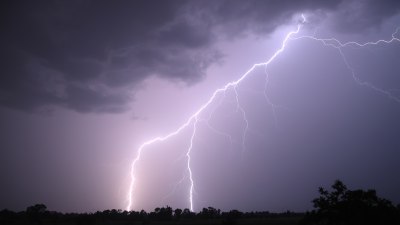
Thunder has captivated human imagination and stirred emotions for centuries. It is more than just a loud noise following a lightning strike; it is a dramatic, natural announcement that commands attention. The saying 'Thunder only shows up when it wants attention' poetically describes how thunder emerges suddenly and forcefully, drawing our senses to the sky. But why does thunder behave this way? What causes thunder to be so pronounced at times and hushed at others? This article dives deep into the physics, meteorology, and cultural meanings behind thunder’s striking presence.
Understanding thunder begins with recognizing its origins. Thunder is the sound that occurs when lightning heats the air around it rapidly. This intense heat causes the air to expand explosively, resulting in a shockwave we hear as thunder. Since sound travels slower than light, we see the flash of lightning before hearing the boom, often by several seconds. Yet, the thunder's volume and timing are far from random; they are influenced by the lightning’s characteristics and the surrounding environment.
What Creates Thunder - The Science Behind the Boom
At the heart of thunder is lightning, an electrical discharge occurring during storms. Lightning can heat the air it passes through to temperatures around 30,000 kelvin (53,540 degrees Fahrenheit), which is five times hotter than the surface of the sun! This sudden heating causes the surrounding air to expand faster than the speed of sound, creating a sonic shockwave that eventually dissipates into the rolling thunder we hear.
This sonic wave travels through the atmosphere and reaches our ears as thunder, but its intensity depends on multiple factors. Thunder’s loudness varies with lightning type, distance from the observer, atmospheric conditions, and the terrain. For example, cloud-to-ground lightning tends to produce a more discernible thunder than intra-cloud lightning, which may generate subtle rumbling or even silent thunder masked by other sounds.
Why Thunder Seems to 'Want Attention'
Thunder’s dramatic and sometimes startling nature can feel as though it shows up deliberately to captivate us. This phenomenon arises because thunder is an abrupt, powerful sound that disrupts ambient noise and triggers a primal alertness in humans. The sudden and loud rumble awakens our senses and demands immediate recognition due to evolutionary survival mechanisms. Warning sounds in nature often serve to caution organisms of danger, and thunder’s booming characteristic functions similarly.
Moreover, thunder's unpredictability contributes to its attention-grabbing nature. Unlike continuous noise, thunder erupts sporadically during storms, creating suspense and emphasis. Psychological studies have shown that humans are especially sensitive to unexpected loud sounds, which naturally grabs our focus. Thus, thunder functions almost like nature’s dramatic punctuation mark, breaking silence with a burst that commands awareness.
Variations in Thunder - When Does It Show Up Loudly?
Although thunderstorms can last for long periods, thunder does not always produce the same auditory impact. Several factors determine when thunder will manifest loudly. The distance between the lightning strike and the listener is pivotal. Close lightning produces sharp, cracking thunder, whereas distant lightning creates rolling, thunderous rumbles. Thunder loses energy as it travels; thus, far-off storms yield less intense sounds.
Atmospheric conditions affect thunder’s propagation as well. Temperature gradients, humidity, wind, and air density can amplify or dampen sound waves. For example, sound travels more efficiently through moist air and cooler temperatures, intensifying thunder. Terrain features also play a role; valleys can echo and amplify thunder, while dense forests or urban structures may absorb sound, muting its impact.
Thunder in Different Cultures and Folklore
Across cultures, thunder has been attributed meanings far beyond its scientific explanations. It often appears as a symbol of divine power, a harbinger of change, or a spiritual message. Ancient civilizations frequently linked thunder to gods of storms and sky phenomena, such as Thor in Norse mythology and Zeus in Greek folklore. These deities were thought to wield thunder as a weapon or communication tool, commanding respect and fear.
Many indigenous cultures around the world share rich thunder lore, where thunder is seen as a living force or a messenger. For example, Native American tribes sometimes interpret thunder as the footsteps of great spirit beings or thunderbirds, mythical creatures whose appearance brings blessings or warnings. The dramatic bursts of thunder were often woven into rituals and stories emphasizing respect for nature’s power.
The Psychological Impact of Thunder
Thunder is not just a physical phenomenon but also evokes powerful emotional responses. The sound’s suddenness can induce fear, awe, or excitement, depending on individual experiences and cultural backgrounds. Children often find thunder frightening because it is loud and mysterious, while adults may appreciate its natural majesty or find it calming.
Scientists studying sound perception have noted that thunder’s low-frequency rumble can resonate with the human body, producing a visceral reaction. This vibrational quality can stimulate the autonomic nervous system, elevating alertness or triggering the fight-or-flight response. Hence, thunder 'demanding attention' also has biological underpinnings that affect mood and behavior.
Why Thunder Is Sometimes Silent or Goes Unnoticed
Contrary to popular belief, not all lightning produces audible thunder. Silent lightning, often called 'heat lightning,' is frequently observed on warm summer nights when distant thunderstorms illuminate the sky without any thunder heard. This phenomenon occurs because the storm is too far for the sound waves to reach the observer, or atmospheric conditions prevent the sound from traveling efficiently.
Additionally, some types of lightning inside clouds may produce little or no thunder discernible on the ground. In these cases, the shockwaves are weaker or dissipate before reaching listeners. Background noise or environmental sounds can also mask the thunder, making it seem as if the thunder 'chose' not to show up. However, these are natural outcomes of physics and environment rather than intentional behavior.
Thunder’s Role in Meteorology and Weather Prediction
Meteorologists rely on thunder and lightning observations to track storm activity and understand atmospheric dynamics. Thunder indicates electrical activity within a storm, helping scientists classify storm severity and lightning frequency. Thunderstorms producing frequent, loud thunder often signify intense atmospheric instability.
Early natural warnings targeted thunder and lightning; hearing thunder close by signaled imminent rainfall or dangerous storms. Today, radar and lightning detection technology supplement these signs, but thunder remains a vital sensory input for those without advanced tools. It also helps communities anticipate power outages, severe weather events, and take safety precautions.
Safety Measures During Thunderstorms
Given thunder’s association with lightning and storm danger, understanding its presence can enhance safety. If you hear thunder, the National Weather Service advises staying indoors because lightning may be nearby. The rule of thumb is that if you can hear thunder, you are within striking distance of lightning. The time between a lightning flash and hearing thunder lets you estimate how far away the lightning is — approximately one mile for every five seconds measured.
Avoid open fields, lone trees, tall objects, and bodies of water during thunder. Seek shelter in a hard-topped vehicle or building. Many injuries and fatalities related to thunderstorms occur from ignoring the warning signs that thunder imparts. Respecting thunder as an attention-getting, powerful natural signal can save lives.
Modern Understandings and Ongoing Research
Research into thunder and lightning continues, unveiling new facets of these phenomena. Scientists study thunder’s acoustic signatures to better comprehend lightning characteristics and storm microphysics. Advances in high-speed photography and audio capture reveal the complex structure of lightning channels and the differing thunder booms they generate.
Understanding thunder also helps in technological applications such as designing better early warning systems for severe weather. Researchers examine how landscapes influence thunder’s propagation to improve hazard communication in urban or mountainous areas.
Moreover, as climate change influences storm behavior, studying thunder’s patterns can shed light on evolving weather risks. Thunder’s presence and intensity may alter as atmospheric conditions change, impacting how societies prepare for future weather extremes.
In summary, thunder doesn’t just 'show up' to make noise randomly. It is an intrinsic part of the atmospheric electrical interplay, manifesting in ways that command our attention due to its origin, nature, and environmental influences. Its unpredictable, booming presence connects humans with the primal forces of nature, delivers practical warnings, and enriches cultural narratives. Appreciating thunder’s multifaceted roles invites deeper respect and wonder for storms, which continues to inspire scientists, artists, and storm-watchers alike.