The Secret Life of a Low-Pressure System in Winter
Explore the intricate journey and impact of winter low-pressure systems shaping weather patterns and influencing environments.
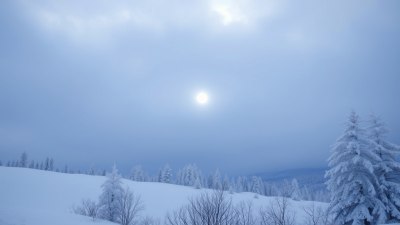
Winter low-pressure systems, often shrouded in mystery, play a critical role in shaping the weather patterns that define the season. These dynamic atmospheric phenomena are responsible for a variety of winter weather conditions, from blizzards to rainstorms. Understanding their formation, movement, and effects reveals much about the complex interactions within Earth’s atmosphere during the colder months.
At the heart of any low-pressure system is a region where the atmospheric pressure is lower than that of the surrounding areas. This disparity causes air to flow toward the low-pressure center. Due to the Coriolis effect, the movement of air around the low-pressure system is cyclonic: it spins counterclockwise in the Northern Hemisphere and clockwise in the Southern Hemisphere. This rotation is the basis of many weather events that unfold during winter.
Winter low-pressure systems commonly form along the polar front, a boundary zone between cold polar air and warmer mid-latitude air masses. Here, contrasting air temperatures and densities create instability. As cold, dense air masses collide with warm, moist air, the resulting lift initiates cloud formation and precipitation. These conditions set the stage for complex winter storms that can span hundreds of kilometers.
The development of a winter low-pressure system usually begins as a wave along the frontal boundary. This nascent disturbance intensifies as warm air rises over retreating cold air, fueling upward motion. Water vapor condenses in the rising air, releasing latent heat, which in turn lowers the pressure further and strengthens the system. This positive feedback loop allows the low-pressure system to grow in intensity, often producing heavy snowfall or freezing rain depending on temperature profiles.
In addition to precipitation, low-pressure systems influence wind patterns significantly. The pressure gradient between the low-pressure center and the surrounding high-pressure areas drives strong winds. During winter, these winds can pick up loose snow, creating blowing snow conditions that reduce visibility and create hazardous travel scenarios. Moreover, the interaction of the low-pressure system with the terrain can amplify wind speeds, resulting in localized gusts that exacerbate the storm’s effects.
Tracking the movement of a winter low-pressure system is crucial for weather forecasting. These systems tend to follow predictable paths guided by the upper atmosphere’s jet stream—a fast-flowing ribbon of air high in the troposphere. The jet stream acts as a conveyor belt, steering low-pressure systems along the mid-latitudes. Shifts in the jet stream’s position can dramatically alter the future course and intensity of a storm system, making forecasting a complex task.
The life cycle of a winter low-pressure system involves stages of genesis, maturity, and decay. Genesis occurs when the system forms along a front or trough, often influenced by upper-level disturbances. During maturity, the system reaches its peak intensity, bringing significant precipitation and strong winds. Finally, the system undergoes occlusion, where the cold front overtakes the warm front, cutting off the warm air supply. This leads to weakening and eventual dissipation of the storm.
One fascinating aspect of these systems is their ability to create a variety of weather phenomena in different areas simultaneously. For example, the warm sector of the low-pressure system might experience rain, while regions to the north and west witness heavy snowfalls. This spatial variation arises from temperature gradients within the system and is the reason winter storms often produce complex and rapidly changing conditions.
Additionally, some particularly intense low-pressure systems, known as Nor'easters in the United States, dominate the winter weather scene along the East Coast. These storms can cause significant coastal flooding, heavy snow, and strong winds due to their prolonged presence and intense dynamics over ocean waters. Their formation often involves several atmospheric ingredients coming together, such as cold air from the north, warm ocean waters, and favorable upper-level wind patterns.
The environmental impacts of winter low-pressure systems extend beyond immediate weather effects. Heavy snow deposits influence freshwater availability, soil moisture, and natural habitats. At the same time, strong winds and snow can disrupt transportation, energy supply, and daily life for affected regions. Understanding the mechanisms behind these systems helps mitigate their negative impacts through improved forecasting and preparedness measures.
Meteorologists use a variety of tools to study and monitor these dynamic systems. Weather satellites provide real-time imagery of cloud formations and movement. Radar systems detect precipitation intensity and type. Furthermore, numerical weather prediction models simulate atmospheric physics to forecast storm development and trajectory. These technologies combined enhance our capability to anticipate the behavior of winter low-pressure systems and issue timely warnings.
Observational data from past winters have revealed trends in low-pressure system characteristics linked to broader climate variability. For instance, changes in sea surface temperatures and Arctic ice cover can influence the strength and frequency of winter storms. Continued research aims to unravel these connections to better predict how future climate change might alter winter weather patterns globally.
The intricate dance of a winter low-pressure system is a testament to the complexity of Earth's atmospheric processes. From formation to dissipation, these systems illustrate the vital interplay between temperature, pressure, moisture, and wind. Their presence defines not only daily weather but also broader environmental and societal dynamics.
Each winter, countless low-pressure systems traverse the globe, often unnoticed except for their tangible impacts on weather and human activity. Their secret lives are written in the swirling clouds and crashing snowflakes that typify the cold season. By delving into the science behind their formation and evolution, we gain a deeper appreciation of winter’s dynamic nature and the atmospheric forces at play beneath the surface of seemingly simple snowstorms.
As climate patterns continue to evolve, the study of low-pressure systems in winter becomes ever more critical. Scientists analyze changes in atmospheric circulation, the jet stream, and ocean-atmosphere interactions to understand emerging trends. This knowledge informs not only academic understanding but also practical applications in weather-dependent sectors such as agriculture, transportation, and emergency management.
In urban areas, winter low-pressure systems challenge infrastructure resilience by causing snow accumulation, ice formation, and wind damage. Cities have developed response strategies including snow removal protocols, road salting, and public advisories to mitigate these effects. The interaction between natural atmospheric processes and human systems highlights the importance of integrating meteorological science with planning and policy.
Beyond Earth, the study of low-pressure systems offers insights into atmospheric dynamics on other planets. Comparative planetology examines how similar pressure-driven weather patterns may emerge under different planetary conditions, enriching our understanding of atmospheric physics more broadly.
In summary, the secret life of a low-pressure system in winter encompasses complex physical processes that drive the weather conditions experienced around the world during the cold season. Their origins along frontal boundaries, development due to thermal contrasts and latent heat release, the impact of the jet stream in steering, and eventual weakening through occlusion define a natural cycle integral to Earth’s climate system. Recognizing the multifaceted nature of these systems allows us to appreciate the subtle yet powerful forces shaping winter weather.
The science behind these atmospheric phenomena continues to advance with enhanced observational capabilities and improved computational modeling. As this knowledge grows, so does our ability to anticipate and respond effectively to the challenges posed by winter low-pressure systems, securing safety and preparedness for communities worldwide.
Ultimately, winter low-pressure systems remind us that beneath the calm blanket of snow or a blustery day lies a dynamic, evolving system crucial to Earth's atmospheric balance. Their secret life is an ongoing story of physics, meteorology, and environmental interaction that continues to intrigue scientists and meteorologists alike.