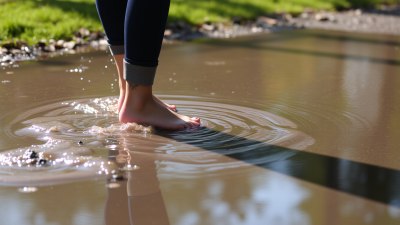
The Physics of Stepping in a Slush Puddle With Full Sadness
Explore the physics behind stepping in a slush puddle and how emotional states like sadness can subtly influence our physical experience.
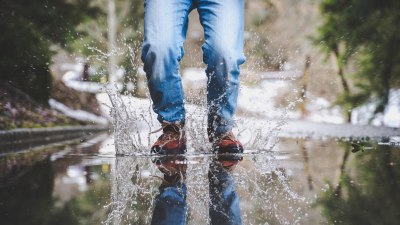
Stepping into a slush puddle is an experience that few welcome, yet many encounter, especially during the transitional seasons of late winter and early spring. It is a seemingly mundane event, but one that involves an interplay of physics principles and, interestingly, human emotion. This article will delve into the physics of stepping in a slush puddle and explore how the emotional state of sadness profoundly colors this physical moment, turning it into a complex sensory and psychological experience.
To begin, let us define what exactly constitutes a slush puddle. Slush is a semi-liquid mixture composed of snow and water, often resulting from melting snow that hasn’t fully transitioned into clear water or refrozen into solid ice. The unique consistency of slush, neither fully solid nor fully liquid, presents interesting challenges when it comes to physics and motion.
Physical Properties of Slush
Slush puddles are characterized by their state of being partially melted snow, consisting of water, ice particles, and air pockets. The viscosity of slush is non-Newtonian, meaning its resistance to flow changes under stress. In slush, applying more force (such as stepping down with weight) can alter its flow properties, temporarily reducing resistance or, conversely, increasing it if the particles pack more tightly.
The density of slush is typically somewhere between that of pure water (approximately 1000 kg/m^3) and ice (about 917 kg/m^3). The exact density varies, depending on the ratio of ice to water within the slush. This density determines the buoyant force exerted on the foot when submerged, which is crucial to understanding why one sometimes feels a sudden slippery or sinking sensation in a slush puddle.
Interaction Between Foot and Slush
When a foot encounters a slush puddle, multiple forces come into play: gravity, buoyancy, friction, and viscous drag. The weight of the body pushes the foot downward, attempting to displace the slush. Buoyancy, the upward force exerted by the displaced slush, resists this penetration.
Friction between the sole of the shoe and the slush determines the likelihood of slipping. Because slush is slippery and yields under pressure, the coefficient of friction is generally low, increasing the risk of loss of balance. Additionally, viscous drag acts to resist the foot’s movement through the slushy mixture, creating a sticky sensation. The interplay between these forces makes stepping into slush less predictable and often uncomfortable.
Thermodynamics at Play
Slush puddles are a frozen-fluid hybrid, existing near the melting point of ice at 0°C (32°F). The temperature of the slush supports an interesting thermodynamic balance wherein the latent heat of fusion plays a role. Latent heat is the heat required for a phase change without temperature change, such as melting ice to liquid water.
When a foot presses into slush, it introduces heat due to body warmth. This heat may contribute to localized melting of ice particles within the slush. Conversely, the cold slush absorbs heat from the foot, potentially lowering skin temperature rapidly. This thermodynamic exchange explains why stepping in slush feels cold and sometimes numbing.
Mechanical Work and Energy Transfer
Stepping into a slush puddle involves mechanical work, as the muscles in the leg perform work to overcome the resistance of the slush. The energy exerted is partly dissipated in deforming and displacing the slush, partly converted into thermal energy due to friction and viscous forces.
The work done is non-linear relative to the depth and consistency of the slush. With shallow, watery slush, the energy expenditure is minimal. In contrast, dense, packed slush requires significantly more force to penetrate, resulting in more muscular effort and energy expenditure.
The Role of Sadness in Physical Sensation
Physical interactions do not happen in isolation from emotional states. Sadness, in particular, can heighten bodily awareness and alter the perception of pain, discomfort, and environmental stimuli. When a person steps into a slush puddle 'with full sadness,' their sensory interpretation is skewed toward negativity, making the event feel more intrusive and discomforting.
Neuroscientific studies have shown that sadness enhances activity in certain brain regions responsible for processing pain and unpleasant sensory input. This biological response amplifies experiences that might otherwise be neutral or mildly unpleasant. Thus, the cold, wet sensation of slush becomes more intense, and the emotional disappointment of ruining shoes or clothes deepens the physical discomfort.
Psychophysiological Feedback Loops
Sadness can also induce bodily states such as decreased muscle tension or altered gait. This change in posture and movement dynamics can inadvertently increase the likelihood of slipping or uneven footing in a slush puddle. The feedback loop between mind and body means that sadness does not only magnify the event’s unpleasantness but might even physically modify the action of stepping into the slush, making it more hazardous or awkward.
Furthermore, the cognitive focus on the negative aspect of the event can divert attention from fine motor control, reducing the ability to adapt balance quickly. This again feeds into the physical consequence of stepping in slush under sadness - a cascade of physics influenced by emotional state.
A Mathematical Model of Foot-Slush Interaction
Modeling the interaction involves considering forces acting on the foot, slush rheology, and energy dissipation. Taking the foot as a rigid body pressing into a viscoelastic medium, equations can describe penetration depth, resistance force, and energy lost.
A simplified force balance can be expressed as F_gravity = F_buoyancy + F_friction + F_viscous. Gravity force is the weight component of the foot, buoyancy depends on displaced slush volume, friction is influenced by slipperiness and shoe material, and viscous force relates to the fluid-like behavior of slush.
Numerical methods or finite element analysis can simulate different variables - shoe sole design, foot velocity, slush temperature, and density - to predict outcomes like slipping probability or depth of penetration.
Emotional Variables in Physical Models
Incorporating emotional variables like sadness into physical models is a nascent interdisciplinary challenge. While physics provides objective measures, emotional states introduce subjective variability. One proposed way is to treat emotional influences as modifying parameters on reaction times, muscle force output, and alertness.
For example, sadness might reduce maximum muscle force by a certain percentage or increase reaction time delay. This could feed into mechanical models as factors slowing corrective motions or reducing overall stability, quantifying how emotional state affects physical action in slush stepping.
Significance of Clothing and Footwear
The type of footwear dramatically affects interaction with slush. Waterproof boots resist water ingress, preventing cold wetness that exacerbates physical discomfort. Sole material and tread pattern influence friction and slip resistance, directly impacting safety in slush patches.
Clothing layers also affect perceived cold and the body's capacity to maintain heat. Wearing insulating layers may mitigate the rapid cooling effect from stepping into slush, tempering the thermodynamic exchange between skin and slush.
Psychosocial Contexts and Memories
Stepping into a slush puddle often evokes memories or feelings beyond the immediate physical event. Childhood recollections, cultural attitudes toward wet or dirty feet, or current mood states all shape interpretation. Sadness can deepen negative memories linked to similar experiences, enhancing current distress.
This fusion of physics and psychology demonstrates the multi-layered nature of such simple events. The slush puddle becomes a site where material reality meets lived human experience, a moment textured by environment and emotion alike.
Strategies to Avoid or Mitigate the Experience
From a physics standpoint, choosing routes that avoid slush accumulation is ideal, as it removes the risk of slipping or wet feet. From an emotional perspective, cultivating mindfulness and acceptance toward minor irritations may reduce subjective suffering.
Footwear with good traction and insulation minimizes the impact of slush on comfort and balance. Quick recovery movements after stepping into slush can prevent falls. Awareness of the interplay between sadness and physical sensation allows one to cognitively reframe the event, reducing emotional distress.
Conclusion Without the Usual Closure
The physics of stepping in a slush puddle entails complex dynamics of fluid mechanics, thermodynamics, and force interactions. Overlaying this with the emotional experience of sadness reveals a fascinating psychophysical landscape. Each step into cold, wet slush carries not only the weight of gravity and viscous resistance but also the intangible heft of emotion shaping perception and action. Understanding this interplay enriches our appreciation of everyday encounters where matter and mood converge, teaching us that even discomfort can be analyzed through the combined lenses of science and feeling.