Spring Rain: Too Gentle to Complain About, Too Persistent to Ignore
A thoughtful and slightly absurd look at spring rain—too soft to resist, too constant to ignore, and somehow always happening just long enough to matter
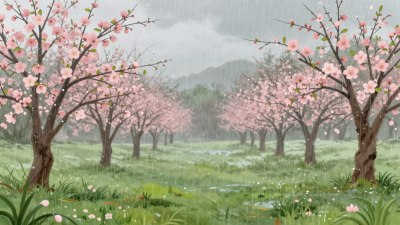
Photo via Canva.com/AI Generated Image
Spring rain does not arrive dramatically.
It does not announce itself with thunder or urgency. It does not demand immediate attention. Instead, it begins quietly, almost politely, as if it would prefer not to interrupt anything important.
This is what makes it effective.
By the time you notice it, you are already in it.
The Problem With Gentle Rain
Heavy rain is easy to understand.
It is loud, visible, and decisive. It tells you clearly what to do: stay inside, find shelter, delay plans, accept temporary defeat. There is no ambiguity. The weather has made a statement.
Spring rain avoids statements.
It exists in a space where action feels unnecessary but inaction becomes inconvenient. It is light enough to walk through, but steady enough that walking through it changes things. Your clothes become slightly damp. Your hair develops opinions. Surfaces lose their reliability.
Nothing is ruined.
Everything is adjusted.
Why You Keep Underestimating It
Spring rain encourages optimism.
You look outside. The rain is barely visible. The ground is only partially wet. The sky is grey, but not aggressively so. It seems manageable, even temporary. You consider leaving without protection, or with minimal preparation, because the situation does not appear serious.
This is the first mistake.
The rain continues.
Not intensely. Not noticeably increasing. Just consistently present. Five minutes becomes ten. Ten becomes twenty. The light dampness becomes something more committed. By the time you acknowledge it properly, you are already experiencing the full version of something you initially dismissed.
Spring rain does not escalate.
It persists.
The Illusion of It Stopping Soon
One of the defining features of spring rain is its ability to suggest that it is about to end.
The drops become lighter. The pattern softens. The sky brightens slightly, as if reconsidering its position. You interpret these signs as progress. You assume the rain is resolving itself, that the interruption is nearly over.
Then it continues.
This cycle can repeat several times without the rain ever fully stopping. Each apparent reduction creates a small wave of optimism, followed by quiet disappointment. The rain never contradicts you directly. It simply refuses to complete the conclusion you have already reached.
This is not deception.
This is incomplete resolution.
Why It Feels Longer Than It Is
Spring rain often lasts for moderate amounts of time.
Not long enough to define the entire day. Not short enough to be ignored. It occupies the middle ground, where duration becomes subjective.
Because the rain is light, it does not create a clear beginning or end. There is no moment when it decisively starts, and no moment when it definitively finishes. It fades in, continues, and fades out with minimal emphasis.
This makes it difficult to measure.
You are left with the impression that it has been raining for a long time, even if the actual duration was modest. The lack of clear boundaries stretches your perception of it.
It feels extended because it never fully commits to being over.
The Sound of It Doing Almost Nothing
Spring rain has a specific sound.
It is not loud enough to dominate the environment, but it is present enough to be noticed continuously. A soft tapping on surfaces. A light hiss against leaves. A gentle pattern against windows that suggests activity without urgency.
This sound is difficult to ignore.
It fills the background in a way that prevents silence but does not replace it with anything decisive. It creates a sense of ongoing motion without clear direction. You are aware of it, but it does not provide information beyond its own continuation.
The rain is happening.
That is all it needs to communicate.
The Umbrella Question
Spring rain introduces a recurring decision problem: whether to use an umbrella.
The rain is light. You may not need one. Carrying it feels excessive. Using it feels slightly dramatic. Not using it feels slightly careless.
There is no correct answer.
If you take the umbrella, the rain may ease to the point where it feels unnecessary. If you leave it, the rain may continue just long enough to make you regret your confidence. If you bring it and do not use it, you carry it as a symbol of caution. If you do use it, you may feel that you have overreacted to something that never fully justified the response.
The rain creates a situation where every choice feels slightly wrong.
Why It Changes Outdoor Space
Spring rain alters the environment without transforming it completely.
Surfaces darken. Colors deepen. Reflections appear where they were not before. The air feels heavier, but not oppressive. The world becomes quieter, but not empty. Movement continues, but at a reduced pace.
This partial transformation creates a sense of suspension.
The day is not cancelled. It is modified. Outdoor plans are not impossible. They are less appealing. The environment is still usable, but no longer comfortable in the same way.
You are left deciding whether to continue as planned or adjust your expectations.
Most people do both, unsuccessfully.
Why It’s Difficult to Complain About
Spring rain lacks severity.
It does not cause immediate problems. It does not disrupt infrastructure. It does not force dramatic changes in behavior. It is simply present, consistently, in a way that affects small things rather than large ones.
This makes complaint feel disproportionate.
You are not dealing with a storm. You are dealing with mild inconvenience. Dampness, delay, slight discomfort, reduced visibility, altered plans. None of these are significant enough to justify strong reaction, but together they create a persistent low-level irritation.
The rain is not bad enough to protest.
It is just present enough to matter.
Why It Still Affects Your Mood
Despite its gentleness, spring rain changes how the day feels.
Light is reduced. Movement slows. The outside world becomes less inviting. Even if you remain indoors, the presence of rain shifts the atmosphere around you. It becomes quieter, more contained, slightly more inward.
This is not negative, exactly.
But it is different.
The day feels less open. Possibilities narrow slightly. Plans become tentative. You are more aware of time passing, because the environment is not encouraging you to use it in the same way.
The rain does not impose a mood.
It suggests one.
What Spring Rain Is Actually Doing
Spring rain is the result of moisture, temperature differences, and air movement creating conditions where water condenses and falls in small, consistent droplets.
It is often associated with stable cloud layers rather than intense storm systems. This is why it remains light but continuous. The atmosphere supports ongoing precipitation without the energy needed for dramatic events.
In practical terms, this means the rain can last longer than expected while remaining relatively gentle throughout.
It is not building toward something.
It is maintaining itself.
What You Can Do About It
You can prepare slightly more than you think you need to.
This is the simplest solution.
Bring the umbrella, even if you are unsure. Wear something that tolerates dampness. Accept that you may be outside in conditions that are neither dry nor decisively wet.
You can adjust your expectations.
Spring rain is not an interruption that will resolve quickly. It is a condition that may remain for a while without becoming anything more dramatic. Treat it as part of the day, not a temporary obstacle.
Or you can ignore it briefly.
Walk through it. Experience the mild inconvenience. Accept the small adjustments it creates. Notice how it changes the environment without overwhelming it.
Spring rain will not insist.
It will simply continue,
quietly, consistently,
until you have no choice but to acknowledge that it was never planning to stop quickly.