How Snow Ends Up Inside Your Boot Without Physics Explaining It
Explore the surprising ways snow sneaks into your boots that defy simple physics explanations.
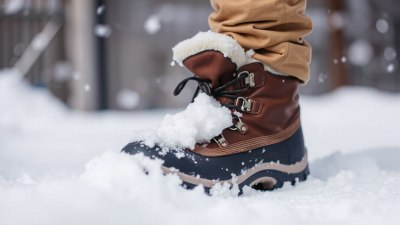
Winter adventurers and casual snow-walkers alike have all experienced the frustrating moment of discovering snow inside their boots after a day spent in the cold. The presence of snow inside your boot often seems like a mystery, a phenomenon that somehow defies basic expectations of physics. After all, boots are designed to keep feet warm and dry, and yet, despite their protective intent, snow manages to find its way inside. This article delves into how snow ends up inside your boot without conventional physics providing straightforward answers.
On the surface, keepsakes of snowfall inside footwear contradict fundamental principles like the impermeability of materials and gravity's downward pull on solids. We expect waterproof boots to repel moisture and maintain a barrier between foot and snow. However, anyone who has braved winter terrain knows that snow infiltration is an almost universal annoyance. So what causes this to happen? To solve this mystery, it’s important to consider the roles of boot design, snow properties, human movement, and environmental factors — all interacting in surprising ways that render simplistic physics explanations insufficient.
Boot Design and Its Limitations
The starting point for understanding snow infiltration is the boot itself. Most winter boots aim for warmth and waterproofing, featuring materials like Gore-Tex membranes, insulated linings, and rubber soles. Despite these technologies, boots must also be flexible and comfortable, which means they cannot be perfectly sealed. Small gaps at the junction where the sole meets the upper part of the boot create microscopic entry points. Even the most precise manufacturing tolerances allow for slight misalignments or flex under movement, which opens tiny channels through which snow can penetrate.
Additionally, many boots include fabric collars or loosely adjustable tops to accommodate different calf sizes and layering. This design choice introduces openings at the boot entry, enabling snow to enter as you walk through powder or slush. Even seemingly sealed designs are challenged by the need for ventilation to prevent overheating and moisture buildup inside, leading to materials that must balance waterproofing with breathability, introducing micro-permeability.
The Nature of Snow: Not Just Frozen Water
To understand how snow can get inside your boots, we must also understand snow itself. Snow isn’t a static block of ice but a complex aggregation of individual snowflakes and ice crystals, often with air spaces. Its granular and sometimes fluffy texture allows it to be compressed, crushed, and broken down easily. When pressure from walking or pressing against snow occurs, the snow compacts and transforms from loose crystals into a wet slurry or even melts slightly, creating liquid water that behaves differently from solid snow.
Moreover, snow is sensitive to temperature changes. Mild warmth from your foot or the environment can cause surface melting, generating a thin film of water. This layer acts as a lubricant, allowing snow crystals to slide into crevices of your boot lining or sole. The capillary action of this thin water film means that moisture can be drawn into materials and seams that physics might otherwise consider sealed, especially in cold weather when surface tension behaves differently.
Human Movement and Unexpected Mechanical Forces
Walking through snow doesn’t involve uniform pressure or conditions. Each step subjects boots to complex mechanical forces — compressions, twists, and bends — that alter the shape and internal volume of the boot. These movements create fluctuating pressure zones inside the boot, occasionally creating brief negative pressure pockets that draw in outside air and any loose snow or moisture it carries. Though this movement-explosion mechanism is subtle and transient, its repeated cycles amplify the chance of snow infiltration.
The dynamics of walking on irregular snowy terrain further complicate things. When boots flex around obstacles like rocks or ice patches covered with snow, pressing snow into small openings becomes more likely. The sometimes rough texture of snow aggregates sharp edges and particles that can work their way into seams and stitching not rated for total impermeability. These mechanical interactions challenge the assumption that physics alone should stop snow ingress, revealing the role of behavior and environmental complexity.
The Role of Micro-Openings and Material Imperfections
Footwear materials, no matter how engineered, are imperfect. Micro-pores, stitching holes, and microscopic tears form pathways of lesser resistance than a solid impermeable wall. Water and snow simulation studies have shown that even a tiny opening provides a conduit for moisture movement, driven by capillarity and pressure gradients instead of simple bulk flow expected by classical fluid mechanics. Snow, particularly when partially melted or compacted, behaves differently from liquid water, making it even harder to predict.
Material fatigue adds to this problem. Over time, repeated flexing, abrasion, and environmental wear gradually enlarges micro-openings or damages waterproof membranes. Boots that once repelled moisture become vulnerable through invisible degradation. It is this slow unseen process that often leads to snow getting inside, even if physics models don’t readily account for the accumulation of microscopic failures spread across a large surface area.
Environmental and Weather Factors
The climate conditions and surroundings during a snowy hike influence how and why snow penetrates boots. Wind can blow fine drifting snow into openings at strong pressure, pushing flakes into the boot’s interior that otherwise might not have entered. Temperature fluctuations impact the state of snow from powder lightness to slick slush, altering its ability to enter material pores.
Wet snow is more adhesive and tends to stick to shoe surfaces, increasing the likelihood of snow accumulation in troublesome areas around the boot top. Conversely, extremely cold and dry snow tends to be powdery and less likely to create wet pathways, but fine flakes can still infiltrate openings through repeated movements and compressions.
A Unique Situational Phenomenon
One intriguing aspect that physics does not fully explain is the unilateral and inexplicable emergence of snow inside the boot despite clear external barriers. This phenomenon partly stems from the combination of many minor effects rather than a single direct physical route. Snow inside boots often results from a cascade of interconnected processes: minuscule fabric stretching under foot pressure, tiny particles blown by the wind, melting and refreezing cycles, and mechanical stress cycles. All these contribute to sudden bursts of snow ingress that cannot be cleanly modeled with standard physics textbooks alone.
In real-world conditions, the unpredictable and chaotic nature of snow and boot interactions resembles complex systems more than static physics. This explains why a scientific explanation quickly becomes fuzzy; each factor’s magnitude changes minute by minute and step by step.
Practical Tips to Minimize Snow Ingress
Understanding that physics can only partially explain snow getting inside your boots helps prioritize practical solutions:
1. Choose Higher Boots: Boots with taller shafts and tight entry collars reduce surface openings where snow can enter.
2. Use Gaiters: These fabric or waterproof barriers wrap around pants and boots, providing an extra seal against snow intrusion.
3. Proper Fit: Boots that fit snugly with minimal space reduce internal volume where snow can creep in.
4. Regular Maintenance: Check and repair worn seams, replace worn waterproof membranes, and keep boots clean to preserve integrity.
5. Avoid Walking Into Deep Snow: Stick to packed paths to reduce mechanical pressures that force snow into gaps.
When Physics Connects to Human Experience
While physics provides a fundamental framework to approach questions about how solids, liquids, and gases behave, the phenomenon of snow ending up inside your boot highlights the limitations of a purely theoretical approach. It serves as a reminder that nature is multifaceted, and practical evidence sometimes supersedes simple formulaic understanding. The complexity of materials, environmental dynamics, and human factors intertwine to produce everyday experiences that defy straightforward physics predictions.
In the end, knowing why snow enters your boot is less about solving a physics riddle and more about embracing the intricate dance between human engineering and nature’s relentless variability. That acceptance helps winter wanderers better prepare and mitigate this chilly nuisance and enjoy the snow with fewer cold surprises.