How Heat Makes Simple Tasks Feel Like Personal Failures
In any other weather, you would have done six things before lunch. Today it is 31 degrees and you have been thinking about getting a glass of water for forty minutes. A serious look at what heat does to ambition
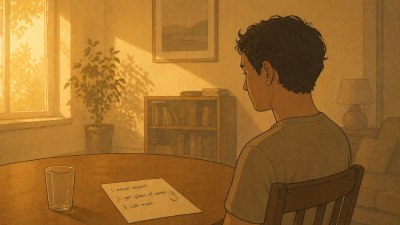
This image was created with the assistance of DALL·E
The Morning Starts With Good Intentions, As It Always Does...
You wake up and the heat is already there. Not building, not arriving gradually the way it does in films about summer, just present, settled, established, as if it moved in overnight and made itself comfortable while you were sleeping. The room is warm. The sheets are warm. The air coming through the window, which you opened before bed in the hope of a breeze, is also warm, and has brought with it the information that outside is not going to be better than inside, which is the first piece of bad news of the day and it is not yet 7am.
You have a list. Mentally, or written down, or in the optimistic project management app you downloaded in January and use approximately twice a year. The list is reasonable. It contains the kind of tasks that on a normal day would be done by noon without particular effort: the thing you need to send, the call you need to make, the errand that requires leaving the house for twenty minutes, the small domestic task that has been on the list long enough to become an ambient source of guilt.
On a normal day, these tasks are tasks. On a 31-degree day, each of them is a negotiation, and the negotiation happens between you and the heat, and the heat is not in a hurry and does not care about your list.
What Heat Actually Does to the Brain, Since This Is Apparently a Science Article
The body's first priority in high heat is thermoregulation, which is the process of keeping the core temperature within the narrow band that organs require to function correctly. This is not optional and it is not negotiable. When the external temperature rises, the body redirects blood flow toward the skin to facilitate cooling, increases sweat production, and adjusts a range of internal processes to manage the thermal load.
All of this costs energy. Not a trivial amount. The body working to keep itself cool in significant heat is doing real physiological work that draws on the same resources available for everything else you were planning to do today. Cognitive function is among the first things to feel this. Attention narrows. Working memory becomes less reliable. The mental effort required to initiate a task, to move from knowing you need to do something to actually starting it, increases in ways that are measurable and well-documented and which feel, from the inside, exactly like laziness but are not laziness at all.
You are not being unproductive because you lack discipline. You are being unproductive because your brain is busy keeping you alive in an environment it was not designed for, and it has quietly deprioritised the email in order to focus on the core temperature, which it considers more pressing.
Motivation specifically takes a significant hit. The prefrontal cortex, which handles planning, decision-making, and the initiation of effortful behaviour, is sensitive to heat in ways that other brain regions are not. The things that feel easy to start on a cool morning feel genuinely difficult to start at 31 degrees, not because the tasks have changed but because the starting mechanism is running at reduced capacity and nobody told you this was going to happen when you made the list.
The Glass of Water Problem
At some point in the mid-morning you become aware that you are thirsty. This awareness arrives not as a sharp signal but as a background condition, a mild persistent discomfort that sits alongside the heat and the growing list and the general sense that the day is not going as planned. You need water. The kitchen is twelve feet away. You do not go.
This is not a mystery but it feels like one in the moment. In any other weather you would stand up, get the water, return, and not think about it again. Today there is a threshold between you and the kitchen that is not physical but is entirely real. Getting up means moving through the warm air. Moving through the warm air means generating body heat. Generating body heat means feeling warmer than you already feel, which is already too warm, and the glass of water at the end of this journey, while genuinely necessary, does not feel like adequate compensation for the journey itself.
So you sit with the thirst for a while, which makes the thirst worse, which makes the thinking harder, which makes everything on the list feel further away, which makes the heat feel more oppressive, which makes getting up for the water feel even less appealing than it did twenty minutes ago.
The glass of water problem is the heat equivalent of a traffic jam. A small hesitation compounds into a delay that makes the original problem worse, which creates a larger hesitation, which creates a larger delay, and at the end of it you are dehydrated and forty-five minutes have passed and you have not sent the email or done the errand or made the call or gotten the water.
The Errand That Requires Going Outside
There is always one thing on the list that cannot be done from the chair you are in. It requires going outside, into the actual heat, the unmediated outdoor version that is worse than the indoor version in ways that are hard to explain to someone who is not currently experiencing it. The outdoor heat has no shade where you are going. It has reflected heat from pavements and walls. It has the specific quality of air that has been sitting in a city for three days without wind, that has absorbed the temperature of everything around it and now offers it back to you at face level as you walk down the street.
The errand takes twenty minutes. You know it takes twenty minutes because you have done it before, in better weather, and thought nothing of it. Today twenty minutes outside is a significant undertaking that requires preparation, timing, and a level of commitment that the morning has not yet produced.
You think about going in the morning, before it gets too hot, and then it is already too hot and the morning window has closed. You think about going after lunch, when you will feel more capable, and after lunch the heat is at its peak and capability is at its lowest and the idea of going then is worse than it was at 10am. You think about going in the evening, when it is cooler, and the evening is a long time away and also the thing was supposed to be done today and waiting until evening means it might not happen and then it goes back on the list and the list gets longer and the heat continues.
The errand does not get done. It goes back on the list, where it will stay until either the weather breaks or the guilt becomes greater than the heat, which takes longer than you would expect and shorter than you would like.
The Afternoon, Which Is Worse
By early afternoon the heat has peaked and settled into its most authoritative configuration. This is the part of the day that belongs entirely to the temperature. Not to plans or lists or intentions or the person you are in cooler weather who does things and feels capable and makes reasonable progress through the tasks that constitute a functional adult life.
The afternoon belongs to the sofa, or the floor if the floor is cooler, or the specific patch of shade in the garden that you identified in the morning and have been protecting psychologically ever since. It belongs to doing nothing at a speed that feels almost meditative if you are generous about it and deeply uncomfortable if you are looking at your phone at the list of things you meant to do today.
The tasks that seemed merely difficult in the morning seem genuinely impossible in the early afternoon. Not because they have changed. Because you have been negotiating with the heat for six hours and the heat has not negotiated back and you are tired in the specific way that heat tiredness produces, which is not the satisfying tiredness of having done things but the flat, resistant tiredness of having spent all day being warm.
You will do something small to prove that the day is not entirely lost. You will answer one message, or tidy one surface, or make one brief call. This small thing will feel, in the heat, like a considerable achievement, and it is a considerable achievement, and you should let it be that without comparing it to what you do on days when the air is fifteen degrees and the brain is fully operational and the glass of water is never more than thirty seconds away.
Why Everything Takes Three Times as Long
The tasks that do get done in high heat take longer than they should, and this is not imagination. Every step in a process that involves moving, thinking, deciding, or doing anything physical takes more time because each step costs more than usual and the body is conservative with resources when resources are being spent on staying cool.
Cooking takes longer because standing over a hot stove in a hot kitchen requires recovery time between steps that cool-weather cooking does not. Writing takes longer because the sentence you were forming dissolves before it finishes and you start it again from a slightly different angle and it dissolves again. Conversations on the phone take longer because the usual speed of thinking through a problem and arriving at an answer has slowed to something more deliberate, more effortful, more subject to small derailments.
You get through it. You usually get through it. But the afternoon you emerge from, when the temperature finally drops a little and the air shifts and something that is almost a breeze comes through the window, is not the afternoon you planned at the beginning of the day. It is a smaller, quieter afternoon, containing fewer things than intended, each of them harder won than they should have been.
What to Do About It, Which Is Not Much
Drink the water early and keep drinking it, before the thirst arrives and the glass-of-water problem sets in. Do the outdoor errand before 10am, before the heat has consolidated its position and while you still have the morning energy that the heat has not yet spent. Accept that the afternoon is a reduced version of a normal afternoon and plan for that rather than against it. Do not make the list in the morning of a heat day the same list you would make on a cool day, because the cool day list will not survive contact with 31 degrees and the gap between what you planned and what happened will feel like failure even when it is just weather.
And when the evening comes and it finally cools and you feel suddenly, surprisingly like a person again, a capable person with working thoughts and the ability to initiate tasks without a forty-minute internal negotiation, do not use that feeling to beat yourself up about the day. Use it to get the glass of water you have been thinking about since 10am, and to note that you are still here, functional, intact, and that the heat did not win so much as it set the terms, and you survived the terms, and tomorrow might be cooler.
Or it might not. The forecast is, as we have established, more confident than it has any right to be.
Drink the water. The list can wait.