Why Winter Weather Ignores Straight Lines
Explore why winter weather rarely follows straight paths, uncovering the complex factors behind snowstorm shapes and movements.

Image created with Flux Schnell
Winter weather often bewilders with its erratic movement and unpredictable patterns, seldom following straight lines. Unlike man-made constructs or planned routes, the natural forces governing winter storms produce winding, twisting paths that defy simple geometric order. This article delves into the intricate reasons winter weather ignores straight lines, exploring atmospheric dynamics, geography, and physics to reveal the complexity behind winter's often chaotic choreography.
The Nature of Atmospheric Flow
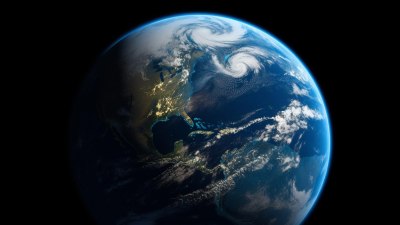
To understand winter weather's curves and bends, one must first grasp how atmospheric flow behaves. Atmospheric motion is driven by multiple factors, including pressure gradients, the Earth's rotation, temperature differences, and terrain features. Air moves from areas of high pressure to low pressure, but due to the Coriolis effect—a result of the Earth’s rotation—wind paths are deflected, spiraling rather than moving in direct, straight lines. This deflection causes prevailing winds to flow along curved trajectories, which influences storm tracks and their ultimate shapes.
The Coriolis Effect and Its Impact
The Coriolis effect plays a pivotal role in steering weather patterns. It causes moving air to veer right in the Northern Hemisphere and left in the Southern Hemisphere. Without this effect, wind and storm systems would theoretically travel straight from high to low-pressure zones. Instead, the Coriolis force bends these paths, producing circular or spiral patterns. This phenomenon is why cyclones and anticyclones—and by extension, winter storms—develop curved structures and do not delineate neat linear paths.
Pressure Systems and Developing Storm Tracks
Winter weather usually originates within or near pressure systems such as lows and highs. Low-pressure systems gather moisture and generate precipitation, including snow. The interaction of these pressure centers creates gradients that the air strives to balance, but the topography of these systems is rarely even or symmetric. This asymmetry contributes to curving storm tracks as the storm seeks paths of least resistance through varying pressure zones and atmospheric layers. These meandering tracks reflect the complex interplay between atmospheric pressure fields and the Coriolis effect.
Jet Streams Sculpt Weather Paths
High-altitude jet streams are fast-moving air currents that flow around the globe, often following jet streaks or meanders called Rossby waves. These waves create troughs and ridges that shape large-scale atmospheric conditions. Winter storms typically develop on the leading edge of troughs where cold air interacts with warmer air masses, fueling cyclogenesis and precipitation events. These jet stream patterns are inherently wavy and sinuous, enforcing curved storm trajectories rather than straight lines. As jet streams shift and oscillate, they effectively dictate where winter weather systems intensify and travel.
Topography’s Influence on Storm Movement
The Earth’s surface is far from uniform, featuring mountains, valleys, plains, and bodies of water that influence how weather systems move. Mountains act as barriers, forcing air to rise, which cools and condenses moisture, creating precipitation. These topographic features also redirect airflows, causing storms to adjust their paths around obstacles. In winter, mountain ranges such as the Rockies in North America or the Alps in Europe cause significant deflections. The resulting storm tracks often curve or split, creating local variations in snowfall and wind patterns. Coastal topography can also funnel or disperse winds, further complicating linear storm paths.
Temperature Contrasts and Air Masses
Winter weather systems often form at the juncture of contrasting air masses, such as cold polar air colliding with warm tropical air. These boundaries, called fronts, are rarely straight lines in nature. Instead, they twist and fold over terrain and interact with other weather systems, generating complex frontal shapes. As air masses converge and interact, storms develop along curved or zigzagging fronts, which contribute to the overall crooked pathways that winter weather follows. Moreover, temperature gradients cause buoyancy differences that modulate storm intensity and shape.
Feedback Mechanisms Within Storm Systems
Storms themselves exhibit internal feedback mechanisms that influence their motion and structure. For example, as a storm intensifies, latent heat release from condensation alters temperature and pressure patterns within its core, which can cause the system to shift course. Wind convergence zones spawn new cells of convection, which in turn can reorganize the storm’s layout. These dynamic processes create ever-changing conditions, preventing simple, linear progression and encouraging circuitous tracks.
Snowfall Distribution and Its Irregularities
The distribution of snowfall within winter storms rarely follows straight lines for similar reasons. Snow bands form where moisture and lift are maximized, and these bands can fluctuate rapidly in position and intensity. Orographic lift, wind shear, and varying moisture availability create snowfall patterns that often appear patchy or curved rather than linear. Satellite and radar images of snowstorms typically show irregular, swirled shapes, highlighting how complex physical processes and terrain combine to avoid straight, predictable snowfall distributions.
Influence of Surface Conditions
Surface features beyond topography, including urban landscapes, forests, and open water, also influence winter weather’s trajectory and behavior. Urban heat islands, for example, can locally warm the air and alter atmospheric stability, shifting precipitation patterns. Open water bodies like the Great Lakes contribute to lake-effect snow, which produces narrow but highly irregular snow belts that rarely align in straight paths. Vegetation cover affects wind flow and surface moisture, indirectly influencing storm development and movement. Combined, these surface factors add more complexity to the storm’s shape and final path.
Why Straight Lines Don’t Suit Fluid Dynamics
The atmosphere behaves as a dynamic fluid, governed by complex equations describing fluid motion. Fluids inherently resist simple linear paths due to instability, turbulence, and interactions at multiple scales. Instabilities in the flow often lead to vortex formations, meanders, and eddies, all of which produce curved or irregular paths. In winter weather systems, these features manifest as spirals, arcs, and loops, reflecting the fundamental nature of fluid flow on a rotating planet. Consequently, expecting winter weather to follow straight lines contradicts basic fluid dynamic principles.
Historical Trends and Observations
Historical meteorological data supports the notion that winter storms tend to follow curved and twisting paths. Storm track analysis over decades reveals patterns associated with jet stream undulations and pressure system shifts. Even forecasting models rely on these curved trajectories to accurately predict storm movement. Attempts to simplify weather forecasts into straight-line progressions often lead to errors because they ignore the governing physical forces. Observational satellites, weather balloons, and Doppler radar continue to provide evidence that winter weather defies straightforward, linear travel routes.
Implications for Forecasting and Preparedness
Understanding why winter weather avoids straight lines is crucial for effective forecasting and public preparedness. Meteorologists incorporate models that simulate the complex factors shaping storm paths, emphasizing curved trajectories to anticipate impacts accurately. Awareness of this complexity helps in issuing warnings for snowfall, ice, and wind hazards in the right locations. Emergency management strategies also depend on recognizing that winter storms move unpredictably, rarely following simple directional paths. This knowledge enables better planning and resource allocation to mitigate weather-related risks.
Urban Planning and Infrastructure Considerations
For communities in regions prone to winter weather, recognizing the irregular nature of storm movement informs infrastructure design and urban planning. Roads, power lines, and buildings can be engineered to accommodate the variable wind directions and snowfall patterns characteristic of winding storms. Snow removal and emergency response logistics must also consider the erratic nature of storm trajectories. Cities that adapt using detailed meteorological insights reduce vulnerability and improve resilience against winter storms that do not adhere to straight, predictable lines.
Future Research Directions
As climate change influences global weather patterns, researchers are increasingly focused on how winter storms may evolve and whether their movement patterns might shift. Improved understanding of the factors causing winter weather to ignore straight lines will enhance predictive models. Advancements in remote sensing, data assimilation, and computational power provide new avenues for studying storm dynamics in greater detail. These future research efforts will refine our grasp of the complex interplay between atmospheric physics, geography, and climate that governs winter weather’s sinuous paths.
In summary, winter weather avoids straight lines due to a combination of forces: the Coriolis effect deflecting airflow, pressure system interactions creating curved gradients, jet stream meanders guiding storms along sinuous routes, terrain influencing airflows, temperature contrasts shaping fronts, and internal storm feedback affecting paths. Additionally, fluid dynamics principles ensure that atmospheric motions produce vortices and meanders, further ensuring non-linear trajectories. Together, these factors weave a complex atmospheric tapestry where winter storms dance along winding, unpredictable courses.
Ultimately, winter weather’s tendency to ignore straight lines is a natural consequence of Earth’s rotating fluid atmosphere interacting with a heterogeneous surface and varying thermal conditions. This understanding allows scientists and practitioners to better anticipate winter storm behavior, reduce hazards, and enhance societal resilience in the face of winter’s complex meteorological phenomena.