Why Sunscreen Always Misses One Spot
You covered every inch. You were thorough. And yet there is one stripe of sunburn on the back of your left shoulder that suggests otherwise
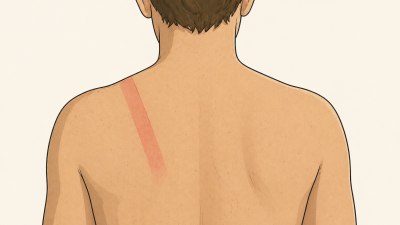
This image was created with the assistance of DALL·E
You Applied It Carefully. This Is the Frustrating Part.
Not carelessly, not in a rush, not in the distracted way that might explain what happened. You did it properly. You squeezed out the right amount, or close to it, and you worked methodically, the way you are supposed to, covering the face first and then the neck and then the arms and then, with the particular awkward choreography that sunscreen application requires, the back.
The back is where it happens. It is almost always the back.
Not the whole back. That would be understandable, an argument for a second person or a spray bottle or a different approach entirely. Just one spot. One stripe, or one patch, or one inexplicable triangle between the shoulder blade and the strap line that received no sunscreen at all, that spent the entire day in full unmediated sun while everything around it was protected, that reveals itself in the shower that evening as a patch of skin three shades darker and significantly warmer to the touch than everything adjacent to it.
You covered every inch. The inch found a way.
The Geometry of the Human Back and Why It Defeats Everyone
The human back is not a flat surface. This seems obvious until you are trying to apply sunscreen to it alone, at which point it becomes the central problem of the afternoon. It curves. It has ridges. The shoulder blades create terrain. The spine creates a channel. The areas just below the shoulder blades are accessible from below with some effort, and the areas just above them are accessible from above with different effort, and somewhere in the middle of that negotiation is a region that neither angle quite reaches, that your hand passes over with the confidence of someone who has definitely covered it while actually covering the area two inches to the left of it.
You cannot see your own back. This is the foundational problem and there is no getting around it. You are applying product to a surface you cannot observe, using tactile feedback that turns out to be much less reliable than it feels in the moment. Your hand reports back: covered. Your back, specifically that one patch, disagrees. The disagreement will not be resolved until the evening, when the evidence is visible and undeniable and also, by then, completely irrelevant.
The missed spot is not random. It is the specific spot that the geometry of independent back-application makes almost impossible to reach, and it is the same spot, or close to the same spot, every single time.
The Confidence Problem
What makes the missed spot particularly hard to prevent is the feeling, during application, that you have not missed it. There is no sensation of absence. You do not apply sunscreen to your back and feel a gap. You feel coverage, because you are feeling the areas around the gap, and the areas around the gap are covered, and the hand moves on with a sense of completion that is entirely false and entirely convincing.
This is the specific betrayal of sunscreen application done alone. It rewards confidence. The more thoroughly you believe you have covered an area, the less likely you are to go back over it, and the less likely you are to go back over it, the more certain the missed spot becomes. Doubt, ironically, is the correct response to the feeling of having definitely finished. Doubt would send your hand back for another pass. Confidence sends you to the beach.
The people who ask someone else to do their back and feel slightly high-maintenance about it are, statistically speaking, the people without the stripe. They were right to ask. They were right every time.
The Spot That Gets It Worst
Of all the missed spots, the one between the top of the shoulder blade and the base of the neck is the most consistent and the most damaging, for two reasons.
First, it is genuinely difficult to reach. From above, your hand comes over the shoulder and covers the top of the back and part of the upper shoulder blade, and then the angle runs out. From below, reaching up behind your back, you get the middle and lower back, and stretch as far as the effort is worth, and then the effort runs out. The gap between these two territories is not large but it is real and it is where the sun does its most considered work.
Second, it is exactly where clothing does not cover on a typical summer day. A t-shirt covers it. Anything with straps does not. The strap creates a line, and the line creates a border, and on one side of the border is protected skin and on the other side is the missed spot, and the contrast between them by the end of the day is precise and geometric and looks less like sunburn and more like evidence of something.
The strap line burn is the sunscreen version of a receipt. It is the body's documentation of exactly where the coverage ended and the optimism began.
The Reapplication Question, Which Nobody Answers Honestly
Sunscreen should be reapplied every two hours, or after swimming, or after excessive sweating. This is not a controversial or contested piece of advice. It is on the bottle, it is in every article about sun safety, it is something everyone knows and almost nobody does with any consistency when actually at the beach or the park or the outdoor event.
Reapplication requires stopping what you are doing. It requires finding the bottle, which has migrated to the bottom of the bag under everything else. It requires doing the back again, which was already difficult the first time and is now more difficult because there is existing sunscreen on the surrounding areas and you cannot feel the difference between covered and not covered even more than before. It requires a level of organisational commitment that the afternoon, with its warmth and its ease and its complete disinclination toward administrative tasks, actively works against.
Most people reapply once, sometime in the middle of the day, with less care than the original application, and consider the matter handled. The missed spot from the morning is still missed. The reapplication adds a second layer everywhere except there. By the end of the day the missed spot has had full sun exposure for six hours and everything around it has been protected twice, and the contrast in the shower that evening is the kind that makes you stand very still under the water and reconsider your entire approach to the outdoors.
The Spray Bottle Theory and Its Limitations
Spray sunscreen exists largely to solve the back problem, and it does solve part of it, in the way that solutions that solve part of a problem are still improvements even if they are not complete fixes. You can spray your own back. This is genuinely useful. What you cannot do is spray your own back evenly, without seeing it, while also holding the can at the correct distance and angle for adequate coverage, while also not getting it on your clothes or the people sitting next to you.
Spray sunscreen applied to the back alone tends to produce coverage that is better than nothing and worse than thorough, with heavy patches where the spray landed directly and thin patches where it drifted, and one spot, reliably, where the wind took it somewhere else entirely at the exact moment that spot was supposed to be covered.
The missed spot is smaller with spray. It is still there. It has simply become more aerodynamic.
What the Missed Spot Costs and Whether It Was Worth It
A single missed spot on a single day is not a catastrophe. It is an inconvenience, a temporary discomfort, a patch of pink skin that fades in a few days and leaves behind a slightly uneven tan that nobody else notices and that bothers you every time you look in a mirror for the next two weeks.
The accumulation of missed spots over a lifetime is something different, which is why dermatologists talk about sun exposure in terms of years and patterns rather than individual days, and why the advice is always consistent and always slightly sobering and always delivered in the tone of someone who has seen a lot of backs and knows what a missed spot looks like after twenty years of summer.
The honest answer to whether it was worth it, the beach, the afternoon, the sun, the missed spot, is almost always yes, with the caveat that next time you will ask someone to do your back, and next time you will mean it, and next time you will probably still end up doing it alone because the moment comes and the bag is already packed and the sun is already out and the asking feels like too much of a thing.
The spot will be missed. The stripe will appear. You will stand in the shower and find it with your fingertips, three degrees warmer than everything around it, and you will know exactly where you went wrong and resolve, sincerely, to do better next time.
Next time is next summer. The resolution will not survive contact with a warm day and a bottle of sunscreen and the specific confidence of someone who is pretty sure they got it this time.
You did not get it. The spot knows.