The Role of Radiative Cooling in Overnight Winter Temperature Drops
Explore how radiative cooling causes significant temperature drops overnight during winter and its effects on the environment.
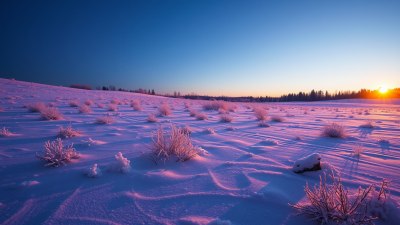
Winter nights often bring a sharp drop in temperature that can be stark and surprising. This phenomenon is largely driven by radiative cooling, a fundamental process where the Earth's surface loses heat by emitting infrared radiation into the atmosphere and space. Understanding radiative cooling provides insight into cold weather patterns, frost formation, and temperature regulation during the coldest months.
Radiative cooling occurs when the Earth's surface emits longwave radiation after sunset. During daylight, sunlight heats the ground and air, but once the sun sets, the source of incoming energy effectively disappears. The Earth's surface then cools by losing heat energy, primarily by radiating infrared energy back into the atmosphere. This loss of energy causes the air temperature near the ground to fall, often leading to pronounced temperature drops overnight.
Several factors influence the efficiency and magnitude of radiative cooling during winter nights. These include cloud cover, humidity, surface characteristics, wind speed, and atmospheric composition. Each factor affects how much infrared radiation escapes and how much heat is retained near the surface, shaping local temperature patterns significantly.
Cloud cover plays a crucial role in moderating nocturnal cooling. Clouds act like a blanket by absorbing infrared radiation emitted from the Earth's surface and re-emitting it back downward. On clear nights with no clouds to impede radiation escape, the surface radiates heat more effectively, leading to large temperature drops. Conversely, cloudy conditions reduce radiative cooling and help maintain warmer nighttime temperatures.
Humidity also affects radiative cooling as water vapor is a strong greenhouse gas. High atmospheric moisture content can absorb and reradiate thermal infrared radiation back to the surface, reducing net cooling. During dry winter nights, less water vapor is available to trap outgoing radiation, causing a greater temperature drop near the surface.
Surface type significantly influences nighttime cooling rates. Different surfaces have varying thermal properties including emissivity, thermal conductivity, and heat capacity. For instance, bare soil or snow-covered fields have high emissivity values, allowing efficient heat radiation. Snow, particularly when dry and fresh, acts as a highly effective radiative cooler because it reflects much solar energy in the day while still allowing strong infrared emissions at night. In contrast, urban areas with concrete and asphalt store heat during the day and release it slowly, which can moderate overnight cooling.
Another important factor is wind speed. Calm conditions promote the development of stable temperature inversions near the ground where cold air pools, intensifying cooling. Windy nights promote mixing of the air, redistributing warm air from aloft downward and reducing temperature drops near the surface. Thus, still air enhances the impact of radiative cooling, enabling colder temperatures to persist.
Atmospheric composition also matters. For example, aerosols and particulates in the air can absorb or scatter infrared radiation, changing the overall radiation budget. The presence of greenhouse gases such as CO2 and methane impacts radiative transfer by absorbing infrared radiation emitted from the ground and re-emitting it in all directions, including back towards the surface. These gases contribute to the greenhouse effect, somewhat mitigating overnight temperature drops but not eliminating radiative cooling.
Winter is particularly conducive to observable radiative cooling effects due to several compounding reasons. First, the sun’s angle is low, shortening daylight hours and reducing incoming solar energy. Second, cold, dry air masses often prevail during winter, minimizing water vapor and thus greenhouse trapping at night. Third, snow-covered landscapes common in winter result in high surface emissivity and low heat storage, intensifying nighttime cooling.
One of the tangible outcomes of radiative cooling in winter is the formation of frost. When surface temperatures drop below the freezing point, water vapor directly deposits as ice crystals on surfaces such as plants, soil, or cars. Frost causes significant agricultural impact by damaging sensitive crops and can be predicted by monitoring radiative cooling trends. Radiative cooling-induced cold spots in areas like valleys or low-lying fields often experience more frequent frost events due to pooling of chilled air.
Radiative cooling does not only affect temperatures at the immediate surface but also influences atmospheric temperature profiles. As the surface cools, the air layer close to the ground cools as well, creating a temperature inversion where temperatures increase with altitude rather than decrease. These inversions can trap pollutants and moisture near the ground, affecting air quality and weather conditions.
Understanding radiative cooling is essential for meteorologists and climatologists in weather forecasting and climate modeling. It helps predict minimum overnight temperatures, frost occurrences, and freezing risk, pivotal for agriculture, transportation, and energy use planning. For instance, accurate knowledge aids in frost warnings that safeguard crops, enabling farmers to take preventative measures such as irrigation or protective coverings.
Moreover, radiative cooling principles are exploited in technologies aimed at energy efficiency and environmental comfort. Passive cooling systems for buildings sometimes incorporate materials and designs that maximize infrared emission at night, reducing the need for mechanical cooling and lowering energy consumption. Similarly, radiative cooling technologies hold promise for developing sustainable cooling solutions in hot climates, utilizing the coldness of outer space during clear nights to dissipate heat.
Case studies worldwide have documented the variability and patterns of radiative cooling effects. In the Arctic, long winter nights combined with snow surfaces lead to some of the coldest minimum temperatures recorded on Earth. In mid-latitude regions, radiative cooling explains the typical strong temperature drops in rural areas compared to urban heat islands. Mountainous regions experience enhanced cooling in valleys due to cold air drainage at night, sometimes resulting in frost pockets different from higher exposed slopes.
Radiative cooling also links with climate change research. Changes in cloud cover, humidity, and atmospheric composition due to global warming affect the degree of nighttime cooling. Increasing greenhouse gases tend to reduce radiative energy loss, which can moderate extreme cold nights but may also disrupt traditional temperature ranges important for ecosystems. Monitoring and predicting these changes requires detailed understanding of radiative transfer processes.
Educational experiments and citizen science projects often highlight radiative cooling by measuring nocturnal surface temperatures under different weather conditions and comparing clear versus cloudy nights. Such initiatives foster wider public awareness of natural climate processes and environmental stewardship during winter months.
In conclusion, radiative cooling is a pivotal process in driving overnight temperature drops during winter. It results from the Earth's surface losing heat by infrared emission when solar radiation is absent. This process shapes cold night conditions, frost formation, and atmospheric temperature structures, influenced by clouds, humidity, surface types, wind, and atmospheric gases. Awareness of radiative cooling is crucial for weather prediction, agriculture protection, environmental management, and advancing sustainable cooling technologies. Its nuanced impacts highlight the complex interplay between Earth's surface and atmospheric components that governs winter temperature dynamics.