The Physics of Snow Getting Inside Places It Shouldn’t
Explore the physics behind how snow infiltrates indoor spaces, defying common barriers and surprising many.
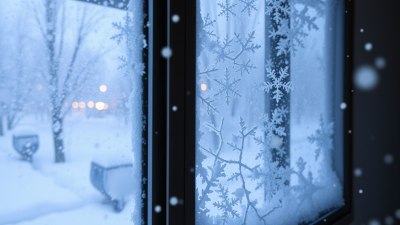
Snow is often viewed as a beautiful, serene meteorological phenomenon, blanketing landscapes in white and inspiring a sense of calm. Yet, beneath this tranquil layer lies a complex interplay of physical forces and environmental factors that allow snow to penetrate into places where it seemingly shouldn’t be. Whether it’s snow sneaking into a cozy cabin, slipping through window seals, or appearing unexpectedly inside vehicles, understanding the physics behind this phenomenon uncovers the secrets of snow’s persistent infiltration.
Properties of Snow Relevant to Intrusion
Snow is not simply frozen water; its physical properties play a crucial role in how it interacts with structures. Fresh snow consists of individual crystals, often loosely bonded, creating a low-density, porous material with a high surface area. This makes snowlight and fluffy, enabling wind to lift and transport it easily. Additionally, the intricate fractal shapes of snowflakes increase air resistance during their descent, allowing for drift and dispersal, which can push snow particles into unexpected nooks and crannies.
Role of Wind in Driving Snow Indoors
One major factor enabling snow to enter indoor environments is wind. Strong gusts can carry snow horizontally at high velocities, creating what are known as snowdrifts that can pile against buildings or seal gaps under doors. The dynamic pressure exerted by blowing snow can be surprisingly high, overcoming small obstacles such as weather stripping around doors or window frames. The physics here involves fluid dynamics principles, where the wind acts as a carrier medium, pushing snow particles through gaps and even forcing compressed air laden with snowflakes to infiltrate enclosed spaces.
Air Pressure Differences and Snow Migration
Changes in air pressure between the outside and inside of a structure contribute significantly to snow intrusion. When wind flows over a building, it can cause localized low-pressure zones on the leeward side, creating a pressure gradient. This gradient encourages air—and with it, suspended snow particles—to move from areas of higher pressure (outside) to lower pressure (inside). Heating inside a building causes internal air to rise, creating slight negative pressure near the floor level. This pressure difference can pull snow-laden air upward through cracks at ground level. The combined effect of pressure gradients and wind-induced air flows drives snow indoors.
Temperature-Driven Factors Affecting Snow Entry
Temperature differences between indoors and outdoors also influence how and when snow enters a space. When outdoor temperatures are below freezing and indoor environments are warm, melting of snow near openings can occur. Meltwater passes through cracks and then refreezes, which paradoxically enlarges gaps over time due to freeze-thaw weathering, allowing more snow to enter subsequently. Additionally, thermal convection currents near doorways can cause turbulent airflow capable of pushing snow particles inside. Cold air sinks outdoors, and warm air rising indoors can create complex convective loops that facilitate snow ingress.
Impact of Structural Design and Material Gaps
The physical design of buildings plays an indispensable role. Older structures often have imperfect seals around windows, doors, and ventilation points. Small cracks or gaps, sometimes invisible to the naked eye, can act as portals for snow intrusion. The elasticity and brittleness of sealing materials at low temperatures can lead to microfractures, enabling snow particle passage under combined mechanical and thermal stresses. In addition, building elements such as latticed vents, open chimneys, or loosely fitted door sweeps provide pathways imperceptible to simple inspection.
Microscopic Snow Penetration Mechanisms
On a microscopic level, snow’s ability to infiltrate spaces arises from particle size and shape. Individual snow crystals range from about 0.1 to 5 millimeters, and their needle-like or plate-like structure facilitates alignment with air currents, allowing them to slip through narrow openings. Electrostatic charges developed during snow crystal formation can cause adherence to surfaces or even repulsion from others, affecting how snow accumulates near entry points. Where humidity is high, partial melting causes snow crystals to coalesce or break apart into granules, increasing their potential to penetrate through varying fissure sizes.
The Role of Snow Sublimation and Resublimation
Sublimation—the direct phase change from solid to gas—also impacts snow presence inside buildings. Snow deposited near entranceways may sublimate, particularly with indoor heating, causing moisture-laden air to enter spaces. This vapor can resublimate on cooler interior surfaces, resulting in inside snow or frost buildup. This process makes it seem as though snow invades further than it physically travels, complicating simple explanations solely based on mechanical intrusion. The balance of indoor humidity, temperature gradients, and air exchange rates governs the degree of sublimation and resublimation cycles.
Human Behavior and Doorway Dynamics
People themselves influence snow ingress patterns. Frequent opening and closing of doors causes pressure fluctuations and gusts that pull or push outdoor air and snow into interiors. Additionally, snow can be tracked indoors indirectly through clothing, footwear, and equipment. Mechanical disturbances from foot traffic can cause snow to fall from edges or surfaces, increasing indoor snow presence beyond the initial infiltration. Such behavior interacts intricately with physical forces to exacerbate snow accumulation indoors.
Mitigation Strategies Rooted in Physics
Understanding the physics of snow intrusion helps in designing better prevention measures. Sealing all potential pathways with materials that remain flexible at low temperatures reduces gap sizes. Installing vestibules or airlocks slows airflow changes near entrances, reducing pressure gradients that pull snow inside. Using heated door frames and thresholds prevents freeze-thaw damage, maintaining the efficacy of seals. Additionally, external windbreaks and snow fences can reduce wind velocity near structures, decreasing the force driving snow intrusion. These strategies exemplify applying physical principles to optimize barrier function against snow.
Snow Inside Vehicles: The Physical Intricacies
Vehicles parked during heavy snowfall commonly suffer from snow inside cabins, often puzzling owners who believe doors and windows are fully shut. The physics here involves pressure differences created as vehicles warm up, thermal contraction and expansion of seals, and the dynamic motion of entering or exiting passengers. Strong winds may also nearby force snow into small vents or under loosely sealed doors. Ventilation systems may inadvertently draw snow inside if filters are inadequate. Hence, mechanical and thermodynamic factors intricately combine to confound simple explanations in vehicle snow intrusion cases.
Unusual Cases: Snow Inside Tents and Temporary Structures
In outdoor camping scenarios, snow can penetrate tents despite fabric walls. Wind-driven snow particles exploit stitching gaps and ventilators, while temperature fluctuations cause fabric contraction creating gaps. Condensation inside tents can freeze, mimicking snow deposits. The porous nature of certain tent materials allows snow particles to adhere or pass through under pressure. These insights emphasize that snow intrusion spans natural and synthetic boundaries governed by universal physical laws.
Snow Intrusion as a Case Study in Fluid and Particle Dynamics
Snow’s chapter in fluid and particle dynamics provides a rich playground for physicists. It demonstrates how granular materials interact with moving air, responding to forces such as drag, lift, and pressure gradients. Snow intrusion into enclosed spaces exemplifies practical implications of turbulence, boundary layer flow, and thermodynamic phase transitions. It offers valuable lessons applicable in fields like environmental physics, architectural engineering, and climatology, where understanding particulate matter behavior informs design and safety considerations.
In summary, the journey of snow from the sky into places it ostensibly should not reach involves an intricate ballet of physical properties and environmental influences. From microscopic crystal geometry and electrostatics to macroscopic wind patterns and pressure gradients, every factor contributes to snow’s persistent ability to infiltrate. Recognizing and addressing these factors can aid in mitigating unwanted snow accumulation indoors, enhancing comfort and safety during the snowy seasons.