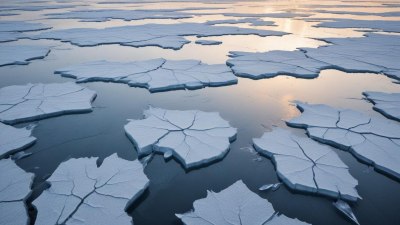
Snowflakes: Beautiful, Unique, and Deeply Inconvenient
Explore the fascinating uniqueness and beauty of snowflakes alongside their inconvenient impacts on daily life and environment.

Snowflakes have long captured human fascination with their delicate, intricate patterns, each one uniquely formed as it falls through the atmosphere. This natural beauty contrasts sharply with the chaos and inconvenience snow can cause in transportation, infrastructure, and daily routine. Understanding snowflakes involves delving into the physics of ice crystal formation, the environmental effects of snow cover, and the cultural significance attached to winter weather.
To appreciate snowflakes, one must start with their formation. Snowflakes form when water vapor in clouds freezes into ice crystals. Temperature and humidity conditions influence the shape of the developing crystals, which grow from hexagonal symmetry due to the molecular structure of ice. As snowflakes descend, they encounter varying atmospheric layers, each with different temperature and moisture levels, which further influences their growth and final form. This process results in the immense variety and complexity of snowflake shapes.
The uniqueness of each snowflake stems from the countless variables in the environment influencing its formation. Although snowflakes share a six-sided symmetry, the exact pattern never repeats because the path of each flake through the air is different. This concept is often simplified to the idea that no two snowflakes are identical, a claim supported by scientific analysis despite popular exaggerations. Close-up photographs taken by researchers reveal an extraordinary array of dendrites, needles, plates, and columns, shaped by subtle differences in temperature and humidity.
The Science Behind Snowflake Formation
At the molecular level, water molecules solidify into a crystalline lattice that favors a hexagonal structure. This happens because of hydrogen bonding: each oxygen atom tends to form bonds with four neighboring hydrogens, organizing in a repeating six-sided pattern. As water vapor freezes, the molecules arrange into this hexagonal shape, fostering six arms of a snowflake extending symmetrically from the center.
Variations in atmospheric conditions create the specific branches and intricate details. For example, colder temperatures near -15°C tend to produce more elaborate, dendritic snowflakes, while warmer conditions favor simpler plate-like forms. Humidity also affects how quickly the crystal grows and the level of complexity. Rapid changes in humidity during descent can cause the arms to develop unevenly, adding to the uniqueness.
Crucially, atmospheric turbulence and collisions with other particles can slightly alter the shape or even cause snowflakes to partially melt and refreeze into composite crystals, further diversifying their appearance. Despite common belief, it is extremely unlikely for two snowflakes to be precisely identical, given the sheer number of possible environmental influences.
Snowflakes and Weather: Impacts and Indicators
Beyond their aesthetic appeal, snowflakes serve as indicators of weather conditions. The form and size of snowflakes can provide meteorologists clues about temperature gradients, humidity, and atmospheric stability. For instance, large flakes often signal moist air and light winds, while smaller, compact flakes typically indicate drier or colder conditions higher up.
On the ground, accumulating snow affects transportation networks. Heavy snowfalls disrupt road traffic, railways, and airports, leading to delays and accidents. The slipperiness caused by snow and ice creates hazardous conditions for drivers and pedestrians alike. Snowplows, salt spreading, and sanding are common mitigation methods, but they require significant resources and can have environmental consequences.
In addition to mobility issues, snow impacts infrastructure. Buildings must be designed to bear the weight of accumulated snow on roofs, especially in regions prone to heavy or wet snow. Water pipes risk freezing and bursting, creating maintenance challenges. Electrical lines are vulnerable to breaking under icy coatings, potentially causing outages.
The Environmental Role of Snow
Snow is vital for many ecosystems. It acts as insulation for soil, protecting plant roots and small animals from extreme cold. Snowmelt provides essential freshwater for rivers and reservoirs, replenishing aquifers and supporting agriculture. Seasonal snow cover also influences global climate patterns by reflecting solar radiation, thereby regulating temperature through a process known as the albedo effect.
However, snow and ice can also exacerbate environmental challenges. Melting snow can contribute to flooding, particularly if rapid temperature fluctuations occur. Changes in snowfall patterns due to global warming affect water availability, impacting communities dependent on predictable snowmelt. Warmer winters have been reducing average snow cover globally, leading to shifts in ecosystems and weather.
Cultural Significance and Artistic Inspiration
Throughout human history, snowflakes have inspired artistic expression and cultural symbolism. Their delicate symmetry and fleeting existence make them potent metaphors for individuality, purity, and the transient nature of life. Snowflakes appear in poetry, visual arts, and even religious iconography.
Winter festivals around the world celebrate snow with sculptures, decorations, and rituals honoring the beauty of frozen water. Children learn about snowflakes through crafts and science projects, fostering appreciation for natural science. In literature, the snowflake’s uniqueness emphasizes themes of diversity and the beauty found in small differences.
Modern Technology and Snowflake Research
Advancements in imaging technology have revolutionized the study of snowflakes. High-resolution photography, including photomicrographs taken with specialized optics and stable temperature conditions, has provided detailed insights into snowflake morphology. Researchers use these images to classify snowflakes, understand atmospheric processes, and even improve weather prediction models.
Artificial snow production, important for winter sports and ski resorts, also depends on understanding snowflake formation. Machines generate tiny ice particles by forcing water droplets through cold air under controlled conditions, producing snow with properties similar to natural flakes. This allows extended winter tourism seasons in areas lacking reliable natural snowfall.
Scientific explorations continue to investigate nanostructures of ice crystals and how environmental pollutants may influence their formation. There is also interest in using snowflake patterns to inspire biomimetic materials design, such as developing surfaces that mimic their water-repelling properties.
The Inconvenience Factor: Navigating Daily Life in Snowy Conditions
Despite their beauty, snowflakes collectively pose substantial inconveniences. In urban settings, snow accumulation leads to blocked roads and sidewalks, making commuting difficult. Public transportation services face delays and operational hurdles. Snow removal requires costly equipment, labor, and chemical agents, such as salt, which can damage surrounding vegetation and water bodies.
For individuals living in snow-prone regions, daily challenges include dressing appropriately for slippery conditions, managing heating costs, and dealing with isolation caused by severe winter storms. Emergency services may face obstacles reaching people in need, particularly in rural areas. Additionally, supply chains may be disrupted, causing shortages of goods in stores.
Snow and ice also impact industries such as construction and agriculture. Projects may be delayed due to frozen ground or unsafe work conditions. Farmers must adapt to snow cover that can protect crops but also delay planting seasons or affect livestock.
Technological Solutions and Adaptations
To alleviate snow's inconveniences, various technological innovations have emerged. Heated sidewalks and roads use embedded electric cables or hydronic systems to melt snow and ice automatically. Advances in weather forecasting provide timely alerts to prepare for snowstorms, improving response and safety.
Vehicle engineering has evolved to improve winter driving safety. Four-wheel-drive systems, anti-lock brakes, and winter tires enhance traction and control on snowy roads. In aviation, de-icing fluids prevent frost accumulation on aircraft surfaces, essential for safe operations during winter.
Municipalities employ sophisticated snowplow routing software to optimize snow clearance efficiency. Environmental concerns have prompted the development of eco-friendly de-icing agents that reduce chloride pollution, although these alternatives often come with higher costs.
Interactions Between Snowflakes and Human Psychology
The presence of snow influences human behavior and mental states. For many, snow evokes nostalgia, joy, and the spirit of holidays, fostering social bonding through activities like skiing, sledding, and snowball fights. Conversely, prolonged snow seasons can lead to “cabin fever” or seasonal affective disorder, as reduced sunlight and outdoor activity affect mood and health.
Urban planning is beginning to incorporate psychological effects of winter weather, promoting green spaces that remain accessible in snow and encouraging community events to maintain social engagement. Recognizing snow’s duality as both a source of delight and challenge encourages balanced approaches to living in snowy climates.
Future Perspectives on Snowflakes and Snow Management
As global climates shift, managing snow and understanding its properties grow increasingly important. Climate models predict that some regions will experience reduced snowfall, while others face more intense winter storms. This unpredictability complicates infrastructure design, water resource planning, and disaster preparedness.
Research continues into snowpack monitoring using satellites and ground sensors to improve forecasting. Efforts to harness snowmelt sustainably focus on balancing ecological needs with human consumption. Engineers are exploring smarter materials for snow accumulation control and renewable energy solutions to aid snow removal operations.
Snowflakes remain symbols of nature’s complexity and impermanence, inspiring both admiration and adaptation. As societies evolve, the challenge lies in embracing their beauty while mitigating their profound inconveniences, ensuring safety, environmental sustainability, and continued wonder at these intricate ice sculptures.
The coexistence of snowflakes’ delicate artistry and their powerful impact on ecosystems and human activities underscores the fascinating relationship between nature’s elegance and the practical realities of life in cold climates. Understanding this balance helps communities develop resilience, innovation, and appreciation for winter’s unique challenges and gifts.