How Wind Reshapes Snow Into Drifts With Aerodynamic Precision
Explore how wind shapes snow into elegant drifts with precise aerodynamic forces, blending meteorology and physics.
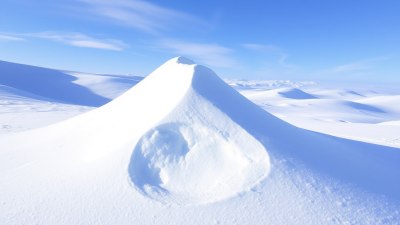
Snow-covered landscapes captivate many with their serene beauty and pristine whiteness. Yet beneath their tranquil appearance lies a dynamic interplay between nature's elements, where wind sculpts snow with remarkable precision, forming drifts that showcase aerodynamic principles in action. Understanding how wind reshapes snow into these intricate formations involves delving into meteorology, physics, and environmental conditions that govern snow behavior.
Wind and Snow: An Interplay of Forces
Wind, in its simplest form, is air in motion. This moving air interacts with snow in varied ways depending on wind speed, temperature, humidity, and the physical properties of the snow itself. Snow consists of loosely bonded ice crystals that are easily influenced by external forces. When wind passes over a snowpack, it can lift, transport, and deposit snow particles, gradually assembling piles known as drifts.
The process starts with aerodynamic forces that cause snow particles to become airborne. As wind flows, shear stress at the snow surface exceeds the critical threshold needed to dislodge grains. This threshold depends on factors such as particle size, cohesion among snow grains, and moisture content. Dry, powdery snow is highly susceptible to wind erosion, whereas wet or crusted snow resists transport.
Mechanisms of Snow Transport
Wind-driven snow movement occurs primarily through three mechanisms: suspension, saltation, and creep. Suspension involves fine snow particles lifted high into the air and carried long distances, contributing to blowing snow and reduced visibility in snowstorms. Saltation refers to the hopping or bouncing motion of snow grains near the surface, where particles collide with the surface causing more snow to lift. Creep is the slow rolling or sliding movement of larger snow particles along the ground, often resulting from impacts of saltating grains.
These transport modes work in concert, redistributing snow from exposed areas to sheltered zones. The interaction of these processes contributes to the formation of snow drifts—accumulations of snow shaped and positioned by the direction and velocity of the prevailing winds.
Aerodynamics of Snow Drift Formation
The shaping of snow into drifts is strongly influenced by aerodynamic principles related to how air flows over surfaces and around obstacles. When wind encounters terrain features such as hills, trees, fences, or buildings, it alters its speed and direction. These changes affect snow deposition patterns dramatically.
On the windward side of an obstacle, increased wind velocities often cause enhanced snow erosion as winds intensify. Just beyond the obstacle, the wind slows down creating zones of lower pressure. These areas favor snow deposition because reduced wind speeds cannot carry snow particles further. Over time, these deposits grow creating drifts that often exhibit characteristic shapes determined by the flow field of air around the obstacle.
Streamlining and Drift Morphology
The forms of snow drifts demonstrate characteristics akin to streamlined bodies studied in fluid dynamics. Drifts often have smooth upstream faces where snow is eroded, and a gently sloping leeward side where snow accumulates. This shape reduces drag forces exerted by the wind and stabilizes the drift's position.
Aerodynamic forces steer smaller snow particles along flow lines established by the landscape, and deposition occurs where turbulence and velocity gradients weaken the wind’s transporting power. The aerodynamic precision that guides snow particles creates repeating patterns, like crescent-shaped drifts near windbreaks or elongated ridges aligned parallel to prevailing winds.
Influence of Terrain and Vegetation
Terrain and vegetation act as natural windbreaks, affecting airflow and snow deposition. Forest edges, shrubs, and grasses trap snow blown by wind, enabling large drifts to form in their lee. Similarly, irregular terrain features cause variations in wind velocity, promoting localized deposition.
The scale of these physical factors varies—from micrometer-scale surface roughness impacting airflow immediately at the snow surface, to large-scale topographical features that channel prevailing winds. Snow can accumulate unevenly due to these factors, creating complex spatial patterns that evolve throughout the winter season.
Temperature and Humidity Effects
Temperature and humidity also influence how snow interacts with the wind. Colder temperatures produce drier snow with less cohesion, making snow vulnerable to being lifted and transported. In contrast, warmer conditions near melting point increase snow moisture content, bonding grains more tightly and reducing their susceptibility to wind transport.
Humidity impacts the crystal structure of snowflakes as they form and change post-deposition. Faceted snow crystals and depth hoar, which form under colder, dry conditions, are brittle and powdery, promoting transport by wind. Sintered snow, with fused granules, is less mobile.
The Role of Snow Crystal Characteristics
Snow crystals vary widely in shape and size, influencing their behavior under aerodynamic forces. Flake size affects the mass and surface area, dictating how easily snow grains are lifted. Smaller crystals remain suspended longer, while larger crystals tend to saltate or creep.
Crystals also differ in density: light, fluffy snowflakes are easily mobilized, whereas compact ice chunks resist movement. Aerodynamic sorting occurs during transport, often concentrating similar particle types within drifts, which can affect the drift’s stability and melting dynamics.
Implications for Winter Environments
Understanding how wind sculpts snow into drifts aids winter hazard management and environmental studies. Accumulated snow drifts can block roads, damage infrastructure, and affect wildlife habitats. Predicting their formation and movement helps in mitigating risks such as avalanche release zones or snow loading on buildings.
Additionally, snow drifts influence ground insulation and soil temperature regulation in winter ecosystems. Areas under drifts are protected from extreme cold, allowing specific flora and fauna to survive harsh winters. The distribution of snow also affects water availability during spring melts, thus impacting hydrological cycles.
Research Techniques and Technologies
Scientists employ multiple techniques to study snow drift formation, including field observations, wind tunnel experiments, and numerical modeling. Field data use anemometers, snow depth sensors, and remote sensing to capture wind and snow distribution.
Wind tunnels replicate environmental conditions to examine how snow particles respond under controlled aerodynamic forces. Computational fluid dynamics (CFD) models simulate airflow and snow transport over complex terrain, improving predictions of drift shapes and locations.
Challenges and Ongoing Studies
Despite advances, challenges remain in fully understanding and predicting snow drift patterns. Snow properties are highly variable and can change rapidly due to temperature swings and metamorphic processes. The interaction of mesoscale weather phenomena with microscale snow behavior demands multi-disciplinary approaches.
Emerging research is focusing on the combined effects of climate change, such as shifts in wind patterns and snowfall characteristics, on snow drift formation. This knowledge is critical for developing adaptive measures in infrastructure design and ecological preservation in snowy regions.
Human Impact and Snow Management
Human activities, like construction of roads, buildings, and windbreaks, alter natural wind flow and snow patterns, sometimes inadvertently creating hazardous snow drifts or uneven snow distribution. Careful planning considering aerodynamic impacts is essential in snowy climates.
Snow fences are engineered structures placed to control drift locations by encouraging snow deposition in designated areas, minimizing accumulation on roads and pathways. Their design depends on aerodynamic principles learned from natural drift formation processes.
Artistic and Cultural Significance
Beyond science, snow drifts hold aesthetic and cultural significance. Their elegant curves and shapes inspire artists and photographers who capture the harmony between natural forces and form. In many cultures, snow-covered landscapes and their sculpted features symbolize purity, transience, and the artfulness of nature.
This synthesis of art and science highlights the profound connection humans have with the winter environment shaped by wind and snow.
The ongoing observation of how wind reshapes snow into drifts serves as a reminder of the subtle yet powerful forces at play in nature, weaving together physics, weather, and landscape.