How Ground Frost Forms From the Bottom Up
Explore the fascinating process of ground frost formation from the bottom up, explaining the scientific principles behind this natural phenomenon.
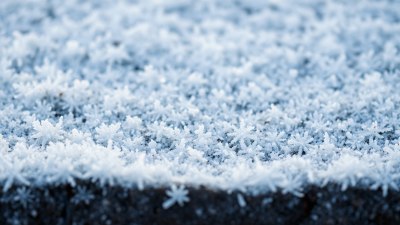
Ground frost is a common occurrence in cold climates, often appearing overnight and covering surfaces with a delicate layer of ice crystals. While most people associate frost formation with the freezing of moisture from the air on surfaces, another intriguing process involves frost developing from the ground upward. Understanding how ground frost forms from the bottom up requires exploring the physics of soil temperature, moisture migration, and freezing point dynamics.
At first glance, frost seems to be a simple event: water vapor in the atmosphere condenses onto cold surfaces and freezes, creating a thin layer of ice. This type of frost, known as surface frost, generally forms when the air temperature near the ground drops below 0°C (32°F) and the humidity is sufficient to allow condensation. However, under certain conditions, frost appears to develop starting below the surface of the soil and extends upward, a process fundamentally different from standard surface frost formation.
The bottom-up formation of ground frost is primarily linked to soil moisture movement and freezing. During cold nights, the temperature at the soil surface can plummet below freezing, initiating a frost front that migrates downward into the ground. Yet, soil heat dynamics mean that deeper layers remain warmer initially, leading to temperature gradients that cause moisture within the soil to move.
When the soil surface temperature drops below freezing, water in the upper soil layers begins to crystallize. As ice forms in these layers, the process draws moisture from the warmer, unfrozen deeper soil. This moisture migrates upward through capillary action and vapor diffusion, moving toward the freezing front. As water reaches the colder zone near the surface, it freezes as well, extending the frost front further down into the ground over time. This migration of moisture from unfrozen to frozen zones is the key mechanism causing frost to grow from the bottom up within the soil profile.
To understand this phenomenon more thoroughly, it is essential to consider soil thermal properties. Soil does not cool uniformly because it has a relatively high heat capacity and thermal conductivity that modulates temperature changes. At night, the surface experiences rapid cooling due to radiative heat loss to the sky and cold air temperatures. Meanwhile, deeper layers maintain residual heat accumulated during the day. This temperature gradient creates the driving force for moisture migration within the soil.
The physical process behind moisture movement toward the freezing front is twofold: liquid water migration through capillary channels and vapor diffusion through soil pores. As ice forms at the frost front, it creates a suction force, known as cryosuction, which pulls liquid water upward from the unfrozen zone. Cryosuction arises because ice has a lower chemical potential than liquid water, causing water molecules to move to the colder, frozen area. Simultaneously, vapor pressure gradients contribute to water vapor migrating toward the freezing front, where it condenses and freezes.
This intricate interaction results in the gradual formation of ice lenses within the soil, visible as distinct layers of frozen ground when excavated. Ice lenses can grow to several centimeters thick and increase soil volume, a process known as frost heave. Frost heave is especially important in engineering and agriculture since it can disrupt foundations, pavement, and plant root systems.
The intensity and extent of ground frost depend on various environmental factors. One critical contributor is soil moisture content; wetter soils provide more water for ice lens formation, resulting in more significant frost development from the bottom up. Dry soils tend to have less frost formation because they lack sufficient moisture to migrate upwards. Additionally, soil texture influences moisture movement; fine-textured soils like silts and clays have smaller pores and higher capillarity, promoting upward water flow and more pronounced frost formation compared to coarse sands.
Another essential factor is air temperature and the duration of freezing conditions. Prolonged cold spells increase the depth to which freezing fronts penetrate the soil, extending frost formation deeper underground. Seasonal variations also play a role, with frost formation being most prevalent during late fall through early spring when surface temperatures commonly drop below freezing overnight.
Vegetation cover and snow insulation further affect ground frost formation. Areas with dense plant cover or thick snow layers experience reduced soil cooling due to insulation, restricting frost penetration depth. In contrast, bare soils exposed to clear, cold skies cool rapidly and are more prone to deep frost formation from the surface downward.
Scientific research has utilized field measurements and mathematical models to study ground frost processes. Thermometers installed at various soil depths monitor temperature changes during freezing events, while soil moisture sensors track the movement of water. Laboratory experiments simulate frost heave and ice lensing under controlled conditions to better understand how soil characteristics influence frost development.
One such model, the thermal conductivity and heat flow equations, describe how heat is transferred through soil and how temperature gradients form. The coupled heat and mass transfer equations account for the phase change of water to ice, moisture migration, and energy exchanges occurring during frost growth. These models are significant in predicting frost depth and potential impacts in construction and agriculture.
Understanding ground frost formation from the bottom up also has implications for ecosystem dynamics. For example, frost heave can influence soil structure, aeration, and nutrient distribution. The expansion and contraction of soil due to freezing cycles cause cracks and pores to open, facilitating gas exchange and microbial activity. However, excessive frost heave can damage plant roots and reduce crop yields.
In cold regions, ground frost processes impact forestry by affecting tree root stability and water availability. Deep frost penetration can limit access to liquid water during winter, causing stress to vegetation. Furthermore, thawing ground in spring can lead to soil erosion and sediment transport, reshaping landscapes.
Beyond natural settings, the phenomenon of frost forming from the bottom up is critical in engineering. Infrastructure such as roads, pipelines, and buildings must be designed considering frost depth to avoid damage caused by frost heave. Techniques like frost insulation, soil replacement, or controlled drainage are often implemented to mitigate ground frost effects.
In summary, ground frost formation from the bottom up is a complex but fascinating natural process driven by temperature gradients, moisture migration, and phase changes within the soil. It challenges the common perception that frost only forms from atmospheric moisture freezing onto surfaces and highlights how subsurface dynamics contribute significantly to frost growth.
The gradual downward progression of the freezing front into the soil creates moisture suction forces that draw water upward, where it freezes and extends the frost zone. This leads to the formation of ice lenses and frost heave, phenomena with far-reaching environmental and engineering impacts. Soil properties, weather conditions, vegetation, and snow cover all play a role in governing the depth and severity of ground frost.
By studying ground frost formation from the bottom up, scientists and engineers gain insights necessary for effective land management, agricultural planning, and infrastructure development in cold regions. It also enhances our understanding of soil-atmosphere interactions and the physical processes shaping the Earth's surface during cold seasons.
The next time you observe frost-covered ground or icy soil, consider the hidden complexities beneath your feet. Far from being a simple surface event, frost formation involves dynamic processes extending well below the surface, quietly shaping the environment from the bottom up.