How Freezing Fog Creates Suspense and Science at Once
Explore the chilling phenomenon of freezing fog and how it blends suspenseful atmosphere with fascinating scientific principles.

Freezing fog is a natural phenomenon that simultaneously evokes feelings of suspense and curiosity, drawing on both atmospheric science and human psychology. This misty veil, tinged with ice, clings to surfaces and obscures vision, creating an eerie environment that has intrigued writers, filmmakers, and scientists alike. The interplay of cold air, moisture, and tiny ice particles crafts a scene ripe for storytelling while also providing a captivating subject for scientific exploration.
At its core, freezing fog is simply fog that forms in subfreezing air, where tiny droplets of supercooled water remain liquid even though temperatures are below freezing. When these droplets make contact with surfaces whose temperatures are below 0 degrees Celsius (32 degrees Fahrenheit), they instantly freeze, coating objects in a delicate layer of ice. This phenomenon, known as frost or rime ice, transforms ordinary landscapes into crystalline wonderlands marked by glistening branches, power lines, and windshields.
The scientific underpinnings of freezing fog rest on the properties of water, particularly under cold conditions. Water can stay liquid below freezing temperatures if it lacks nucleation sites to initiate the phase change, making supercooled water droplets stable in cold air. When these droplets encounter a freezing surface, they freeze in place, meaning the fog essentially deposits ice onto objects. This process differentiates freezing fog from ordinary frost, which forms directly from water vapor deposition rather than from liquid droplets.
Meteorologically, freezing fog typically occurs under specific conditions: clear skies or light cloud cover at night, calm or light winds, high relative humidity near the surface, and a temperature inversion where cold air is trapped close to the ground beneath warmer air. These conditions allow moisture-laden air near the ground to cool to saturation, forming fog. Because the air temperature remains below freezing, the suspended droplets are supercooled, generating freezing fog. Such circumstances frequently arise during winter months in valleys or other areas prone to stagnant cold air.
The visual and sensory qualities of freezing fog contribute to its reputation as a harbinger of suspense. As icy fog envelops a scene, visibility diminishes drastically, shrouding the environment in gray-white obscurity. The familiar world becomes alien and unsettling, filled with distorted sounds and shadowy shapes revealed only partially through the haze. This sensory ambiguity taps into natural human fears of the unknown, producing heightened tension and a foreboding atmosphere.
In literature and film, freezing fog often sets the stage for suspenseful narratives. Crime scenes, mysterious encounters, and moments of revelation gain an added layer of dramatic effect when obscured by this chilling mist. The fog not only conceals characters and action but also symbolizes confusion, danger, or supernatural presence. Writers may use it metaphorically to reflect the uncertainty or emotional coldness within characters, enhancing the thematic depth of their stories.
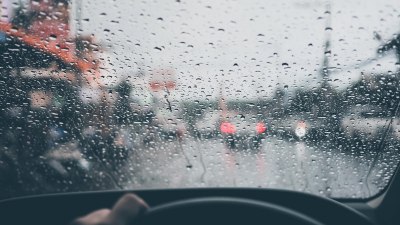
Beyond its atmospheric contributions, the science of freezing fog has practical implications, particularly in transportation and infrastructure. Ice accumulation on roads, power lines, and aircraft caused by freezing fog can lead to hazardous conditions, service disruptions, and accidents. Understanding the formation, behavior, and mitigation of freezing fog is therefore critical for weather forecasting and public safety measures. Meteorologists often track freezing fog events through satellite imagery, ground observations, and specialized sensors, issuing warnings to reduce risk.
Technological responses to freezing fog are diverse. Road crews may apply de-icing chemicals to prevent ice build-up and improve traction, while power companies implement design strategies such as heating elements or aerodynamic structures to reduce ice accumulation on lines. Aviation relies on both pilot training and onboard systems to handle freezing fog and its related icing conditions, ensuring safer takeoffs, landings, and flights.
The detailed study of freezing fog intersects with broader research in atmospheric physics and climate science. By examining how supercooled water droplets form and behave, researchers gain insights into cloud microphysics, precipitation processes, and energy transfer in the lower atmosphere. Freezing fog thus serves as a natural laboratory for exploring the complex interactions between temperature, humidity, and phase changes, shaping weather patterns and ecosystem dynamics.
Ecologically, freezing fog impacts plants and wildlife. The ice accumulation can weigh down branches and alter habitats temporarily. Some alpine and polar species have adapted to survive and even thrive in environments where freezing fog is a regular occurrence. For example, mosses or lichens may utilize the moisture supplied by freezing fog to sustain themselves during dry winter periods. Animals might also modify behavior patterns to cope with the thermal and visual challenges created by this phenomenon.
The cultural significance of freezing fog extends into folklore and traditions in cold regions. Many communities associate the arrival of the white, icy fog with changes in seasons or omens, often imbuing it with mystical qualities. Art and photography frequently capture its haunting beauty, emphasizing contrasts of light and shadow and the fragile nature of ice crystals. This blending of scientific marvel and aesthetic experience highlights humanity's enduring relationship with the natural world.
From an educational perspective, freezing fog provides a compelling example to teach key scientific concepts such as supersaturation, phase transitions, and thermodynamics. Demonstrations and experiments can replicate aspects of freezing fog under controlled conditions to illustrate these principles tangibly. Field observations encourage students to connect theoretical knowledge with real-world environments, fostering curiosity and appreciation for atmospheric sciences.
In summary, freezing fog occupies a unique space where the eerie allure of suspense meets the rigors of science. Its chilling embrace transforms landscapes into mystical realms while inviting inquiry into the physical processes that govern our atmosphere. Whether inspiring a tense narrative scene or challenging meteorologists to refine forecasts, freezing fog captivates through a dynamic interplay of natural beauty, danger, and discovery. Through understanding this phenomenon, we gain insight into both the moods of nature and the mechanisms of weather that shape our daily lives.
By merging sensory experience with scientific explanation, freezing fog exemplifies how natural phenomena can enrich human culture and knowledge simultaneously. Its presence calls us to look closer, beyond the cold haze, toward the intricate workings of moisture and cold, life and environment. As we navigate fog-laden mornings or watch ice crystals glitter in dim light, we participate in a story that spans storytelling and science, suspense and certainty, the ephemeral and the enduring.